
Caesar and Cato’s Very Intimate Enmity
One of Roman history’s bitterest rivalries was more personal than many realize.
Gaius Julius Caesar and Marcus Porcius Cato were two towering figures of Rome’s Late Republic. And they hated each other’s guts.
Caesar was the scion of one of Rome’s most ancient families, a master politician, and a ruthless conqueror—not to mention something of a heartthrob (more on that later). He was also, despite his Patrician background, a populist who made common cause with Rome’s downtrodden plebeians.
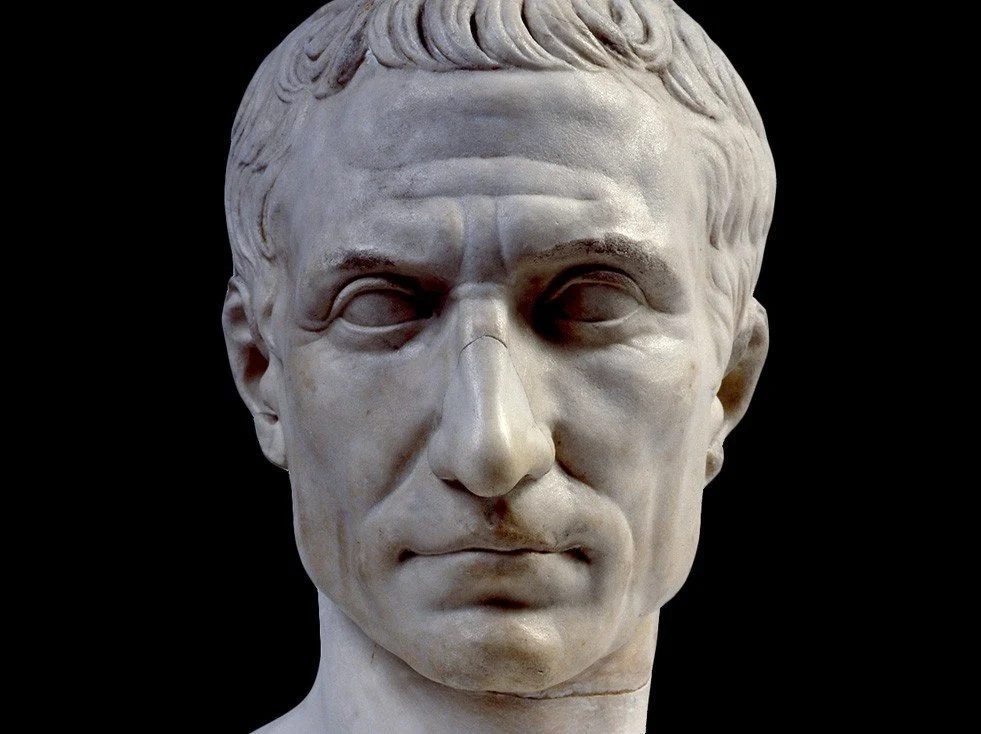
Chiaramonti Caesar (ca. 1st century B.C.E.), Vatican Museums, Rome
Cato—or Cato the Younger, to distinguish him from his less well known, but equally irascible, forebear—was an inveterate curmudgeon and a staunch, uncompromising traditionalist. He fought furiously to preserve elite prerogatives against popular demands for a greater share of Rome’s wealth and power (the Cato Institute in D.C. is named for him, if somewhat indirectly—I invite you to draw your own conclusions about that).
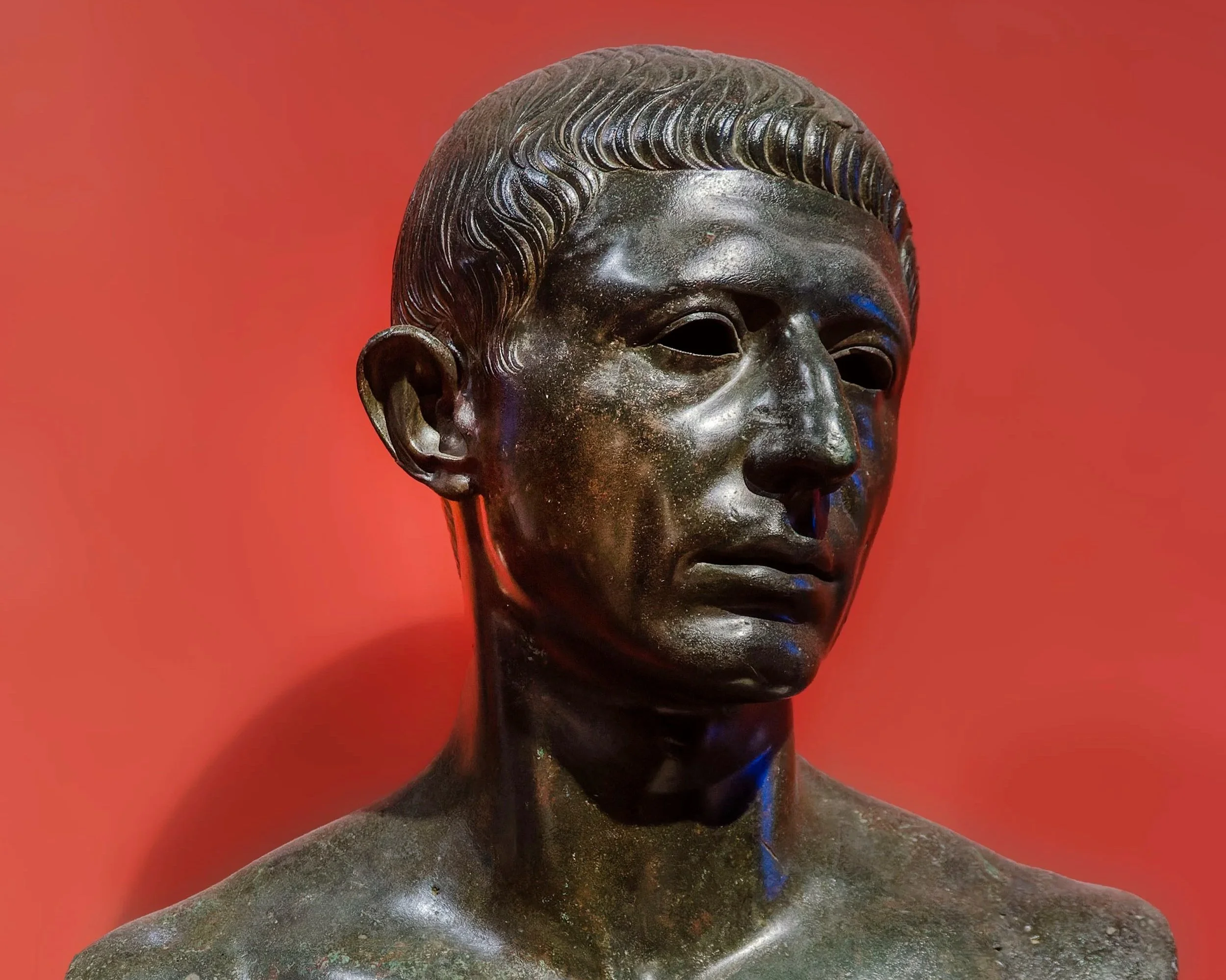
Bronze portrait bust of Cato (ca. 1st century C.E.), Musée de l'Histoire et des Civilizations, Rabat
It was almost inevitable that these two men would loathe one another—and not solely for political reasons.
Caesar was a notorious womanizer, famed for his many affairs. He even fathered a son by Cleopatra, before her later, more famous liaison with Marc Antony. He was also known to seduce the wives of his enemies—whether this was to gain political advantage, or simply because he could, is open to interpretation.
One woman, however, stood out: Servilia. She was brilliant, beautiful, politically astute, and, like Caesar, descended from an impeccable Patrician bloodline.
She was also Cato’s half-sister.
In 63 B.C.E., Rome was rocked by the Catilinarian Conspiracy, a failed plot by disaffected nobles to take over the Republic by force. In a state of near panic, the Senate gathered to decide the fate of those conspirators who had been apprehended.
The debate was long, heated, and bitter.
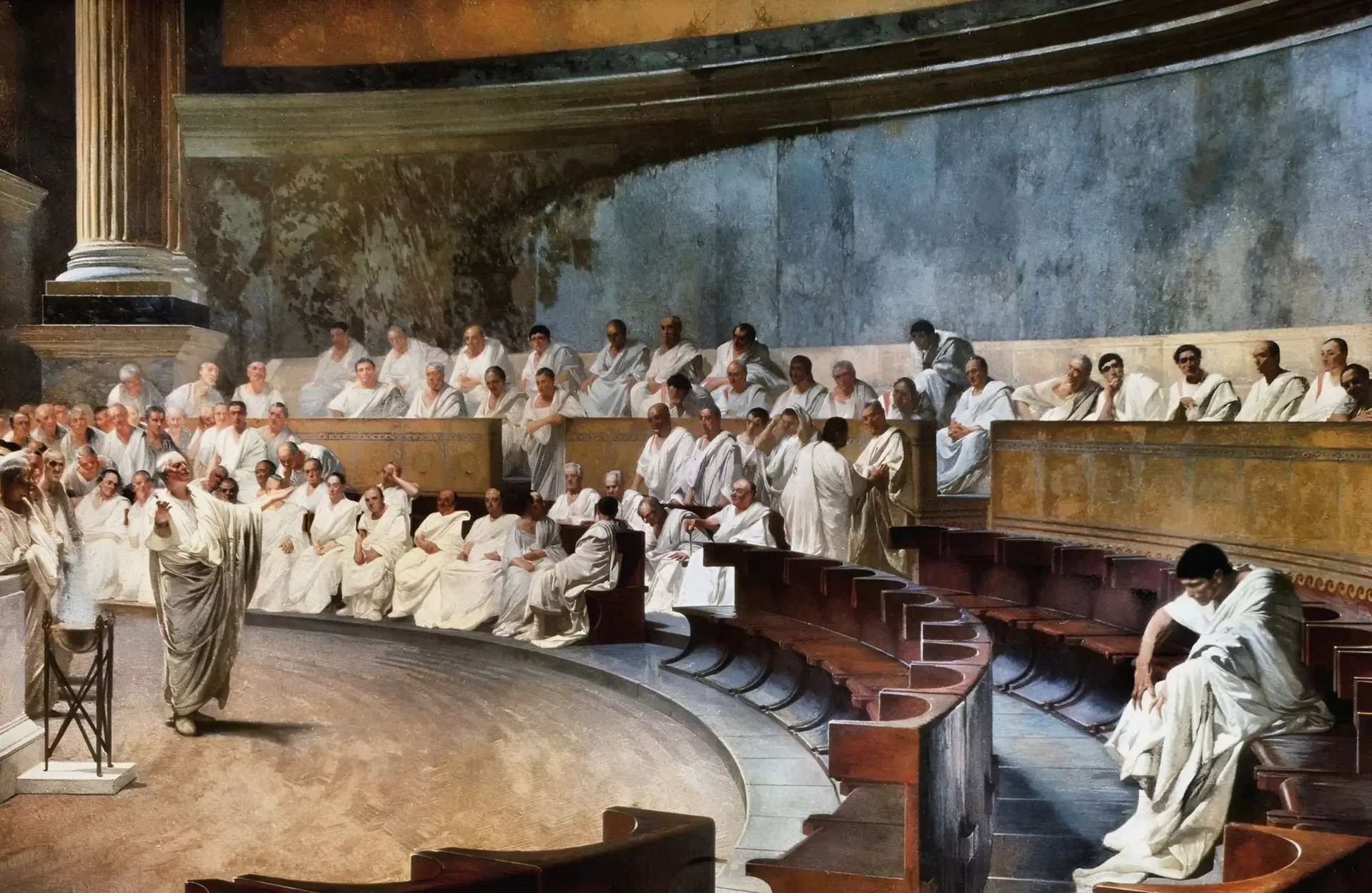
Cesare Maccari, Cicero Denounces Catiline (1888), Palazzo Madama, Rome.
Cato, with characteristic restraint, demanded their immediate execution—despite the fact that Roman law forbade putting citizens to death without trial. Caesar argued instead for imprisonment, and Cato claimed that Caesar’s call for leniency was motivated by his own involvement in the plot.
At one point, a servant brought Caesar a letter. He read it, rolled it up, and returned his attention to the debate.
Cato immediately seized on the moment. Surely, he declared, Caesar was receiving secret messages from the remaining conspirators. He demanded that Caesar surrender the letter so that it could be read out to the entire Senate, and thus expose his vile treason.
Caesar handed over the scroll with evident reluctance and, one imagines, gleeful anticipation.
Cato began to read. Then stopped.
Color rose in his face. His voice failed him. His eyes goggled out of his head.
This was no treasonous communication, but a love letter—written to Caesar by none other than Servilia. The kind of love letter that would make any brother blush to read silently, let alone out loud in front of the entire 500-strong body of the Roman Senate.
Horrified and humiliated—and with the laughter of his senatorial colleagues ringing in his ears—Cato threw the letter back in the face of Caesar, who, we must assume, could not have been more thrilled with the outcome of the intercourse—so to speak.
But Cato got the last laugh. His arguments carried the day, and the conspirators met their ends by strangulation, without benefit of trial.
Moreover, Servilia’s own son—Cato’s nephew and son-in-law—was Marcus Junius Brutus, later one of Caesar’s principal assassins and he of et tu, Brute? fame (although Shakespeare took license with Caesar’s last words, which were reportedly in Greek).
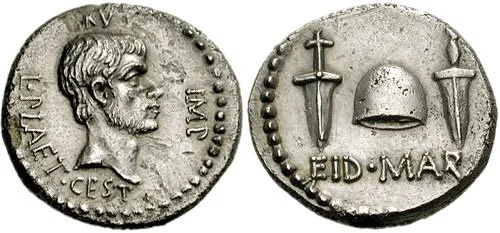
Ides of March Denarius, struck ca. 43-42 B.C.E.
Obverse: Portrait of Brutus
Reverse: liberty cap, with two daggers, and EID MAR
One suspects that, had Cato lived to see it, he would have found this outcome deeply satisfying.