
When the Praetorian Guard Auctioned Off the Throne
Rome wasn’t built in a day—but in 193 C.E., it was sold in one afternoon.
The Praetorians were the Roman emperors’ personal bodyguards, whom a former student of mine at UC Berkeley once colorfully described as “imperial meat-shields.”
Despite the rather straightforward job description, by the close of the second century C.E., members of the Guard had been involved in the murders of three emperors—Caligula, Galba, and Domitian—and this does not count the alleged pillow-smothering of Tiberius or the wholesale desertion of Nero, which led to his suicide.
In this installment of Did You Know?, we dig into perhaps the most notorious scandal in the Praetorians’ scandal-rich history.
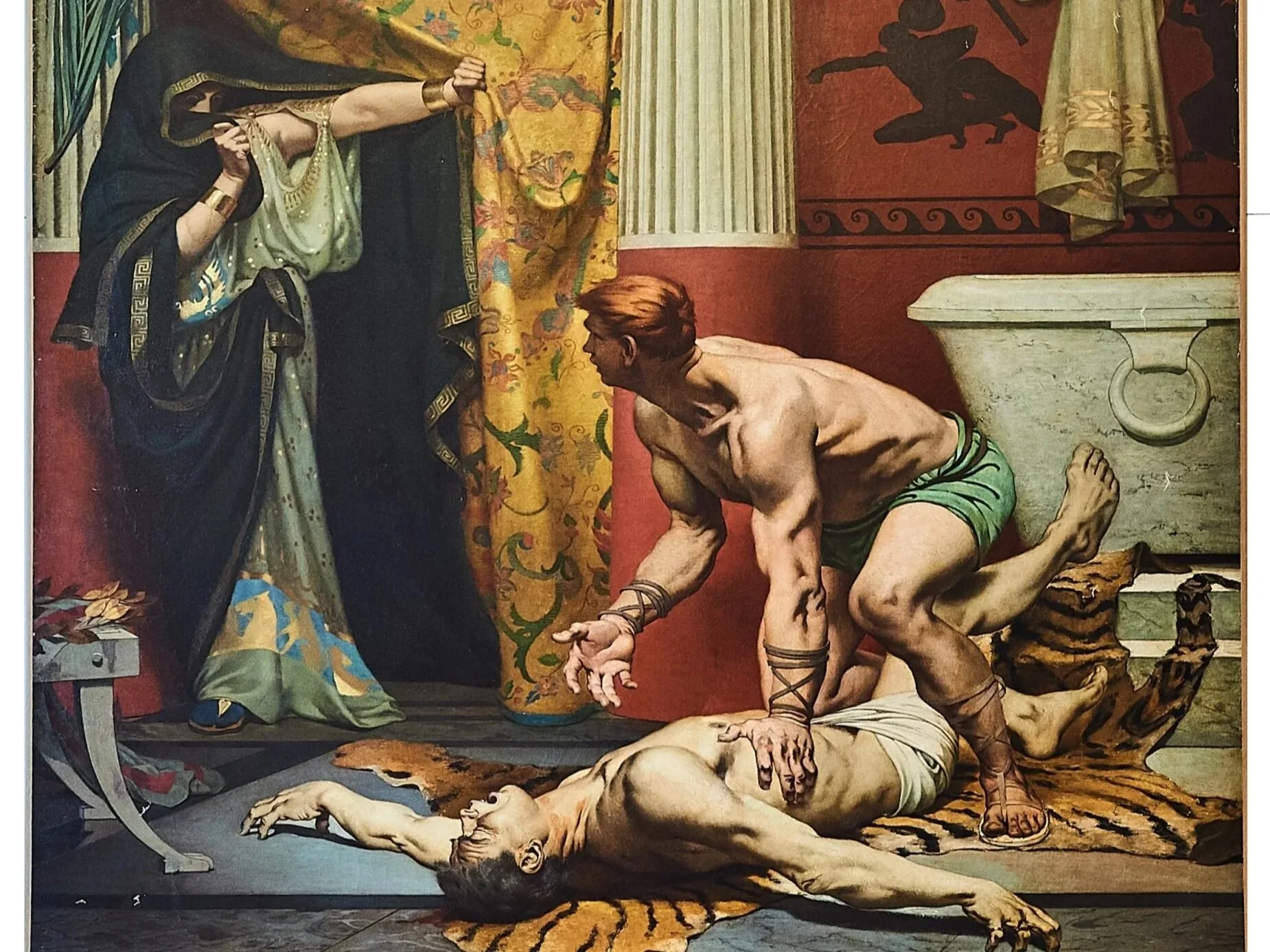
Fernand Pelez, La mort de l’empereur Commode (1879), Petit Palais, Paris.
On December 31, 192 C.E., the emperor Commodus (yes, that Commodus) was assassinated in a quasi-Rasputinesque farce—first poisoned at dinner, and when that did not do the trick, strangled in the bath by his wrestling partner. The plot was engineered by, among others, Laetus, the prefect of the Guard.
And this is far from the Praetorians’ worst showing in this story.
The Senate selected as Commodus’s successor a certain Pertinax. He was popular with his fellow senators as well as the Plebs, but the rank-and-file Praetorians were unhappy with his elevation.
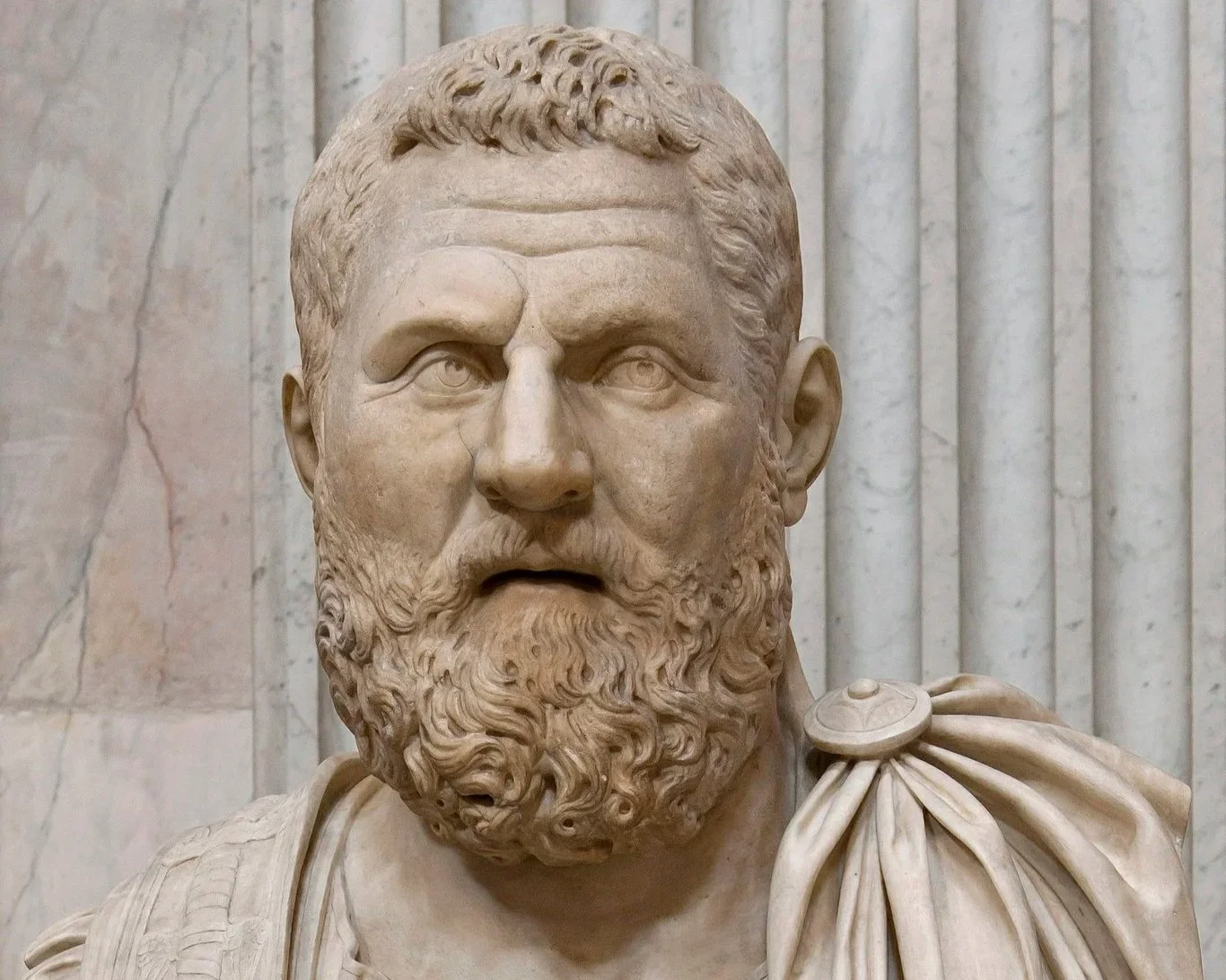
Portrait bust of Pertinax (193 C.E.), Vatican Museums, Rome.
Commodus had spent much of his reign indulging in his gladiatorial fantasies and let the Praetorians do pretty much whatever they wanted. Pertinax was a stern disciplinarian, who vowed to bring the Guard to heel.
It did not help matters when Pertinax offered the Praetorians a very modest donative—officially a gift offered out of a spirit of imperial largesse, in reality, a bribe every new emperor had to give in order to keep his head connected to his neck—which convinced the Praetorians that Pertinax was not the man for them.
After a reign lasting a mere eighty-seven days, a column of several hundred Praetorians stormed the palace and, after only a moment’s hesitation, cut Pertinax down.
This launched an immediate constitutional crisis. The Senate, technically the only body empowered to choose a new emperor, was thrown into confusion and uproar by the sudden murder of their chosen emperor.
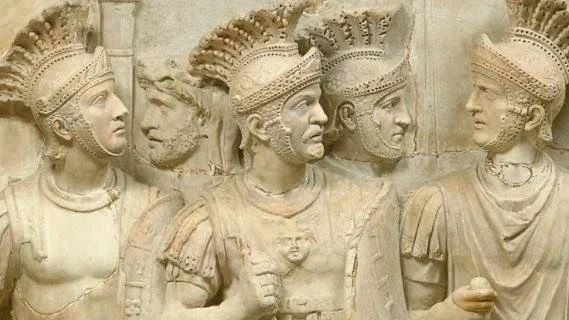
The Praetorians Relief (ca. 51 C.E.), originally from the Arch of Claudius, Louvre Museum, Paris.
While the Senate dithered, Laetus and the Praetorians stepped eagerly into the power vacuum—because they had lit upon a way to get theirs. They made it known that the Empire was up for grabs and that the man with the biggest purse would take all.
The Praetorians intended to auction off the entire Roman world to the highest bidder.
Pertinax’s father-in-law, Sulpicianus, who had been dispatched to the Praetorian camp earlier to calm the soldiers, tried to see the silver lining in the tragic demise of his daughter’s husband, and opened negotiations with Laetus and his subordinate commanders. Meanwhile, Didius Julianus, a senator backed by significant wealth and—according to hostile sources—a nagging and greedy wife who fancied herself the next empress, arrived at the gate of the camp to make his own play for the purple.
The soldiers did not grant Julianus entry, perhaps fearing that the two candidates might collude to keep the price low. Instead, they relayed the competing bids back and forth between them.
Sulpicianus, ensconced in Laetus’s headquarters, would make a bid. Then a soldier would be sent running to the wall, from which he would bark the number down to Julianus and await the counteroffer shouted up by a slave.
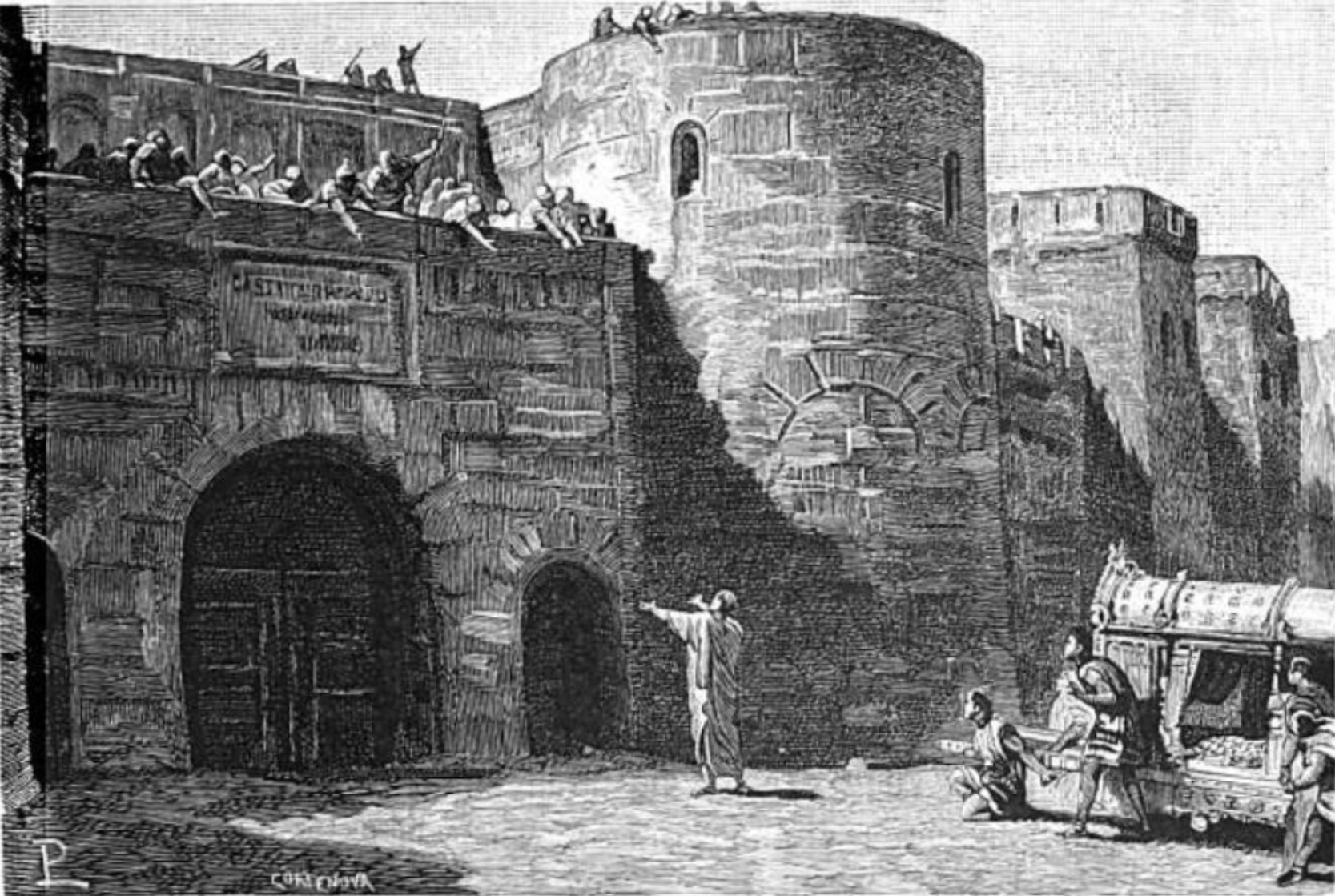
Lodovico Pogliaghi, Didio Giuliano compera l’Impero all’incanto, from Francesco Bertolini, Storia di Roma, Fratelli Treves, Milan, 1886.
Hour by hour, the numbers grew larger—and ever more outlandish.
Five thousand sestertii per man. The equivalent of an entire year’s pay in one fell swoop.
Ten thousand sestertii.
The cost of a prize chariot racehorse.
Twelve thousand five hundred.
Enough for a modest farm and the slaves to work it.
As the auction dragged on, a crowd of civilians gathered to watch the absurd spectacle, muttering darkly at the rapacity of the Praetorians and the indignity of watching their empire being hawked like second-hand furniture. But they were powerless to intervene against the soldiers’ high walls and sharp swords.
Sulpicianus, hoping to bring things to a close, went all in. He promised twenty thousand sestertii to every Praetorian under arms, with bonuses for the centurions and officers.
The bid was reported to Didius Julianus at the gate. He rubbed his bearded chin, steeled himself and whispered in the ear of his slave.
“Twenty-five thousand!” the slave rasped, his voice nearly gone.
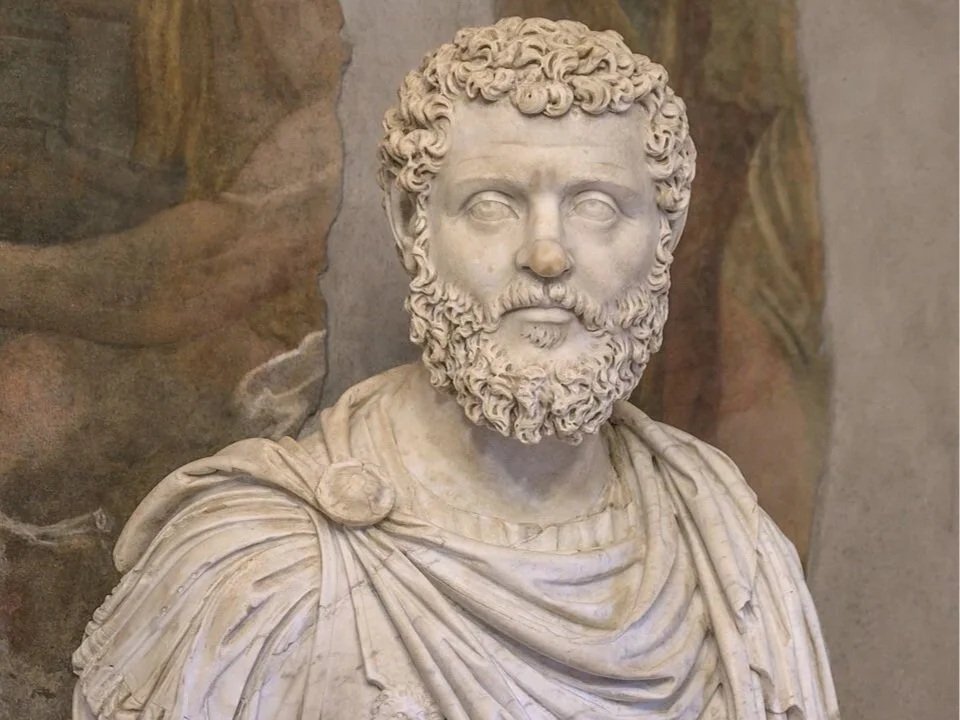
Portrait bust of Didius Julianus (193 C.E.), Capitoline Museum, Rome.
Laetus and his men could not believe their luck. Twenty-five thousand sestertii! It was enough for every Praetorian to purchase an estate and establish himself among the lesser nobility. They were set for life!
Julianus was declared the winner of this sordid charade—although, to his credit, he allowed Sulpicianus to keep not only his life, but also his wealth and station. Given the oftentimes literally cut-throat nature of Roman imperial politics, this was extraordinarily generous.
Nevertheless, Didius Julianus had three major problems:
He might have the Praetorians on his side, but his stunt had earned him the hatred of the Senate and the People—the latter even daring to pelt him with stones whenever he ventured from the palace.
Neither his personal wealth nor the contents of the treasury were enough to fund the massive donative he had promised, and he knew the Praetorians would not wait long to be paid.
Powerful generals on the frontier were watching developments with growing interest, weighing the moment to take the throne for themselves.
As it happened, all three problems came together to spell Julianus’s doom.
Within a few weeks, Septimius Severus, commander of Roman forces on the Danube, marched on Rome. Across Italy, cities threw open their gates to Severus. The Praetorians, still unpaid, abandoned their emperor. The Senate declared Julianus a public enemy and sentenced him to death.
The arrival of Severus in Rome brought a reckoning for the leading figures of this whole affair. Julianus was hunted down and slaughtered, protesting to the end that he had done none harm. The prefect, Laetus, his immediate subordinates, and any who were implicated in the deaths of Commodus and Pertinax were executed. The rank-and-file Praetorians were disarmed, cashiered en masse, and banished from Rome, forbidden to come within 100 miles of the city on pain of death. Severus replaced them with his own legionaries.
Sulpicianus, who had been left alive by Julianus, survived a few years, but he was later accused of supporting one of Severus’s rivals and—guilty or not—was put to death.
Septimius Severus went on to fight two civil wars before his grip on the empire was secure, founding what historians call the Severan dynasty. He was succeeded by his two sons, Antoninus—better known as Caracalla—and Geta, who loathed each other with a passion that made the Praetorians’ mercenary scheming look almost wholesome by comparison. That fraternal hatred, and the bloody reckoning to which it led, is the catalyst that drives the plot of Slaves to Fortune.
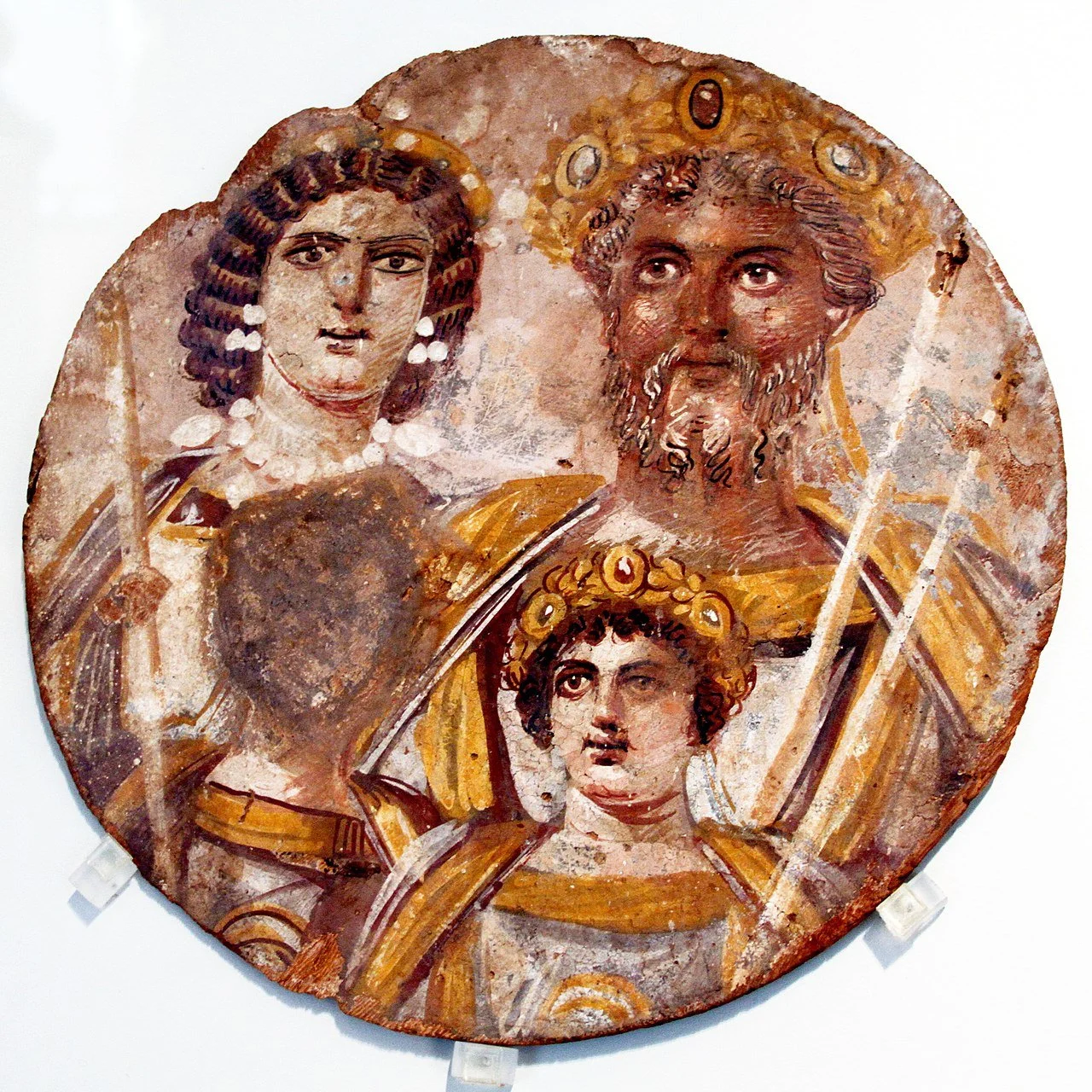
The Severan Tondo (ca. 200 C.E.), Altes Museum, Berlin.