
Ancient Rome’s Favorite Condiment
Pretty much everything you’d want—and probably not want—to know about Rome’s love affair with funky fermented fish sauce.
Take a bunch of fish guts and blood, smother it in salt, pack the whole mess into a sealed jar, and leave it in the hot Mediterranean sun for months and months until it ferments.
Does that sound good?
Well, the Romans thought so.
Fermented fish sauce, known as garum, was a highly-prized commodity—so central to Roman cuisine that its popularity would astonish even the most devoted modern fans of mayonnaise, barbecue sauce, and ranch dressing.
Of the nearly 500 recipes that come down to us in the ancient Roman cookbook De Re Coquinaria, over 350 of them called for garum in some amount—even a few desserts. Roman diners splashed it on nearly everything—meat, vegetables, fish, flamingo tongue—you name it.

Fish Mosaic (ca. 100 B.C.E.), Pompeii.
As with so much that pertains to Ancient Rome, garum had a distinct class dimension. In the first century C.E., an amphora of the highest-quality product could cost more than three years’ wages for the average legionary. Meanwhile, the very poorest Romans had to make do with allec, a paste made from the feculent mash of fish parts that settled at the bottom of the jar.
As much as Romans adored their fish sauce, they were well aware that making it produced some… unwelcome side effects—chief among them, the smell. In an early example of public nuisance laws, civic authorities required that manufacturing facilities be located beyond the city walls—and sometimes even farther away. One factory at Ascalon (modern Ashkelon in Israel) was situated two kilometers from the city center.
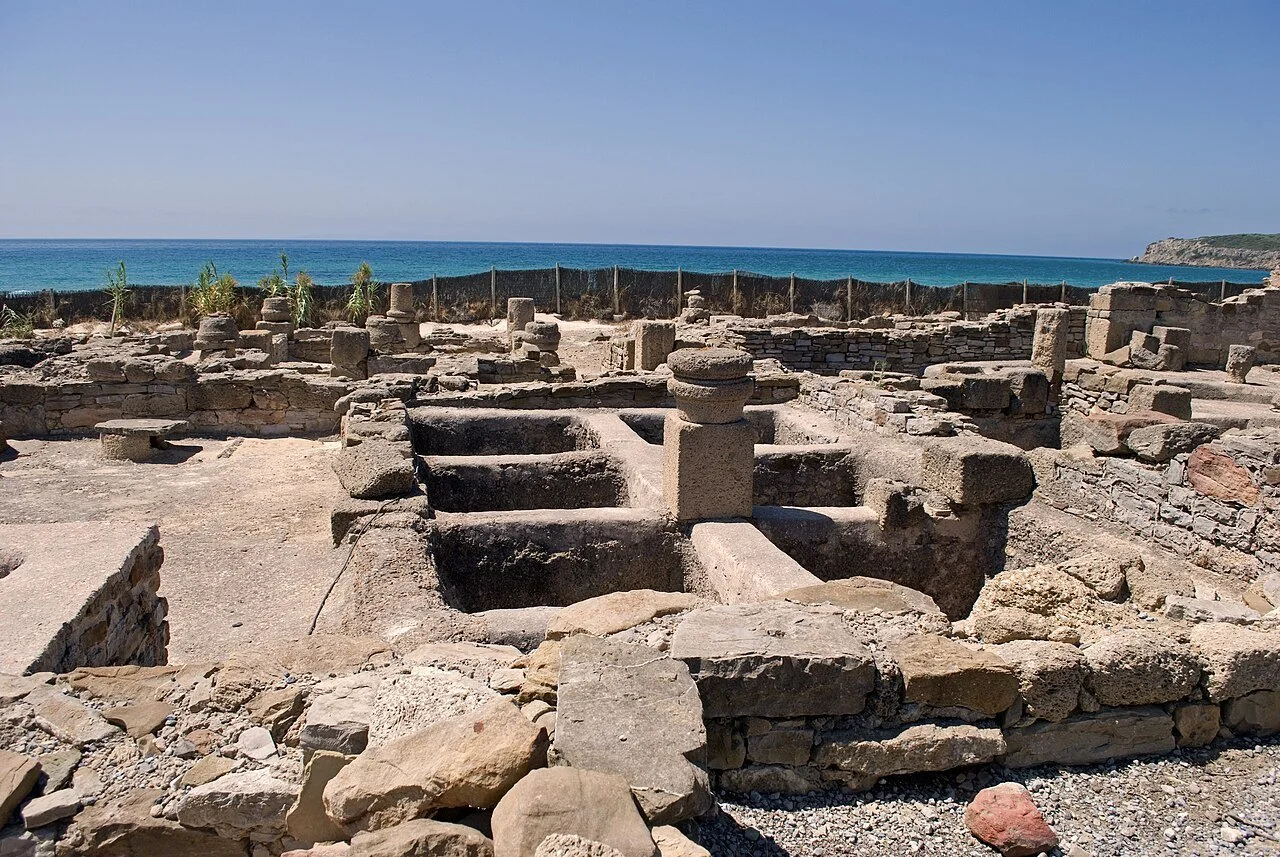
Remains of the garum factory at Baelo Claudia, near modern Tarifa, Spain.
And speaking of garum in Jewish contexts, there is evidence to suggest the existence of a market for kosher fish sauce. Archaeologists have found jars stamped with the ancient equivalent of modern kosher certifications at numerous sites, including Pompeii and Masada.
Despite its popularity, not all Romans were sold on garum. The statesman Seneca, whose Stoic philosophy appears as a prominent theme in Slaves to Fortune, famously asked:
“Do you not realize that garum sociorum, that expensive bloody mass of decayed fish, consumes the stomach with its salted putrefaction?”
There is no evidence to suggest that garum or any similar products—such as Colatura di Alici, Phu Quoc, and Worcestershire Sauce, which are still eaten today—cause deterioration of the human stomach, but that is not to say that garum posed no health risks whatsoever.
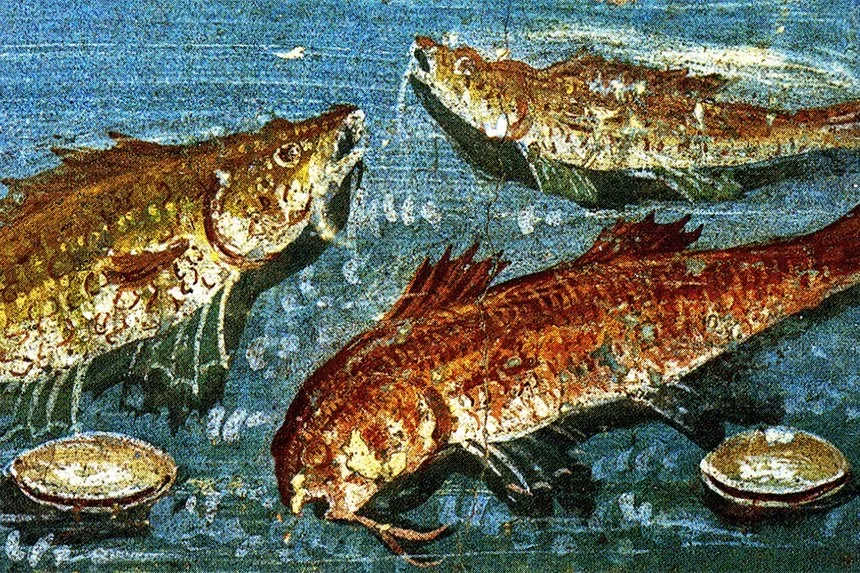
Fresco of fish from Pompeii (ca. first century C.E.), Museo Archeologico Nazionale di Napoli, Naples.
Modern experts have linked Rome’s passion for garum to the proliferation of tapeworms and other food-borne parasites. Such parasites, previously uncommon in many parts of the Roman world, became widespread as Rome’s culinary habits followed its legions and merchants to even the most far-flung corners of the Empire. A remarkably high percentage of skeletal remains from this period show signs of serious, and even fatal, anemia, caused by parasitic infection. Ironically, the Roman fondness for public baths—which did not refresh their water very frequently—may also have contributed.
If the tapeworms haven’t put you off entirely, Max Miller has a fantastic episode on garum on his YouTube channel, Tasting History with Max Miller. I highly recommend it.
And after watching him make his own garum, mayonnaise may suddenly seem like the safer choice…