
Imperial Last Words—Part 1
From Stoic to sarcastic to simply unhinged, there is something for everyone in the famous last words of Rome’s emperors.
The Greeks and Romans set a lot of store by last words. To their minds, if life was a theatrical performance, then death was the final curtain call.
Last words were considered the capstone on a person’s life—revealing their truest character and cementing their legacy—and ancient historians, especially the more gossip-mongering among them, were eager to record—and maybe even embellish—them.
The following are some of my favorite recorded last words of Rome’s emperors:
Augustus (27 B.C.E.—14 C.E.)—Acta est fabula. Plaudite.
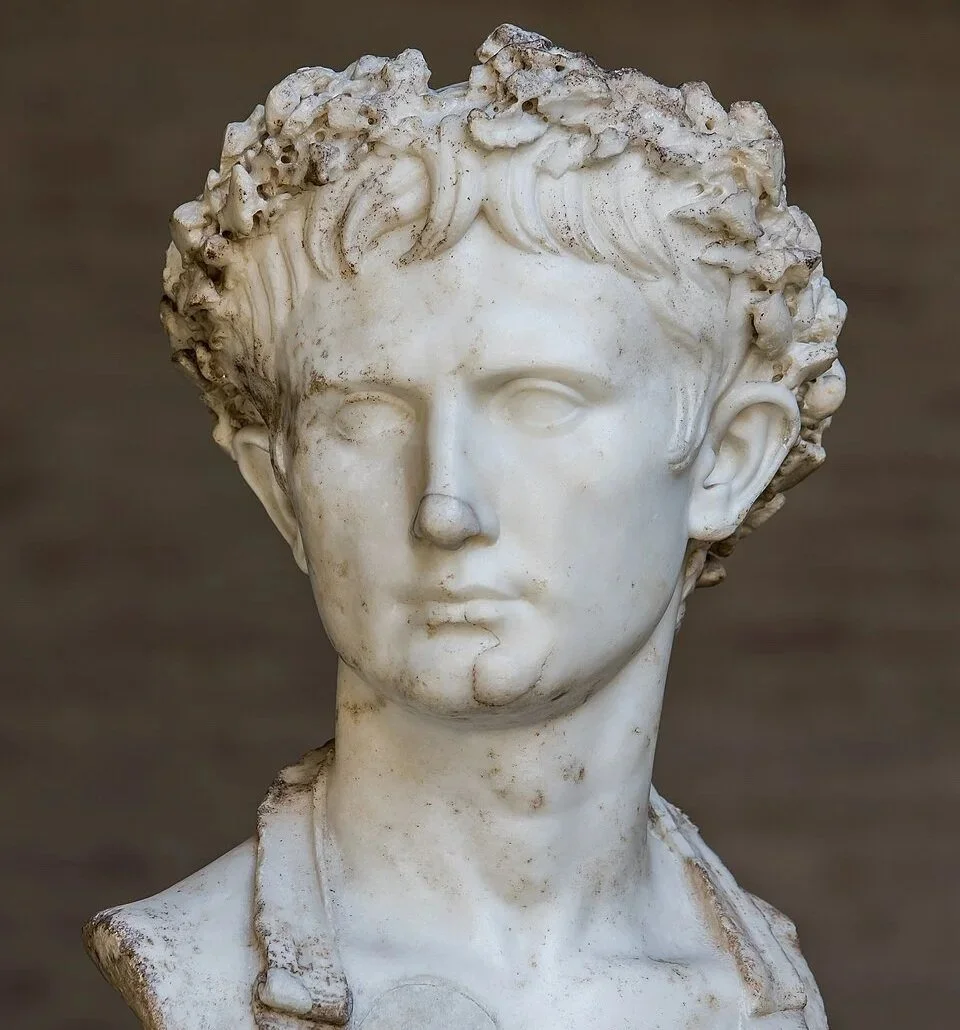
Marble bust of Augustus (ca. 1st century B.C.E.),
Glyptothek, Munich.
Augustus was Rome’s first emperor and the man who ended the cycle of political violence and civil war that had roiled the city for the preceding century. And yet, domestic tranquility came at a price: the end of nearly half a millennium of elected government in favor of a system that was monarchic in all but name.
With a dramatic flourish—following the analogy of the theater from above—Augustus is reported to have told his deathbed companions, “The play is over. Applaud.”
If, indeed, these were his last words, they were perhaps more ironic than he intended. Augustus always claimed that he was restoring traditional Roman mores and governance while, in fact, he worked concertedly and systematically to take and hold power and bequeath it wholesale to a chosen successor.
Taken in this context, these final words could be understood as an admission—conscious or not—of the lifelong farce Augustus had undertaken in pursuit of absolute power.
Caligula (37—41 C.E.)—Vivo!
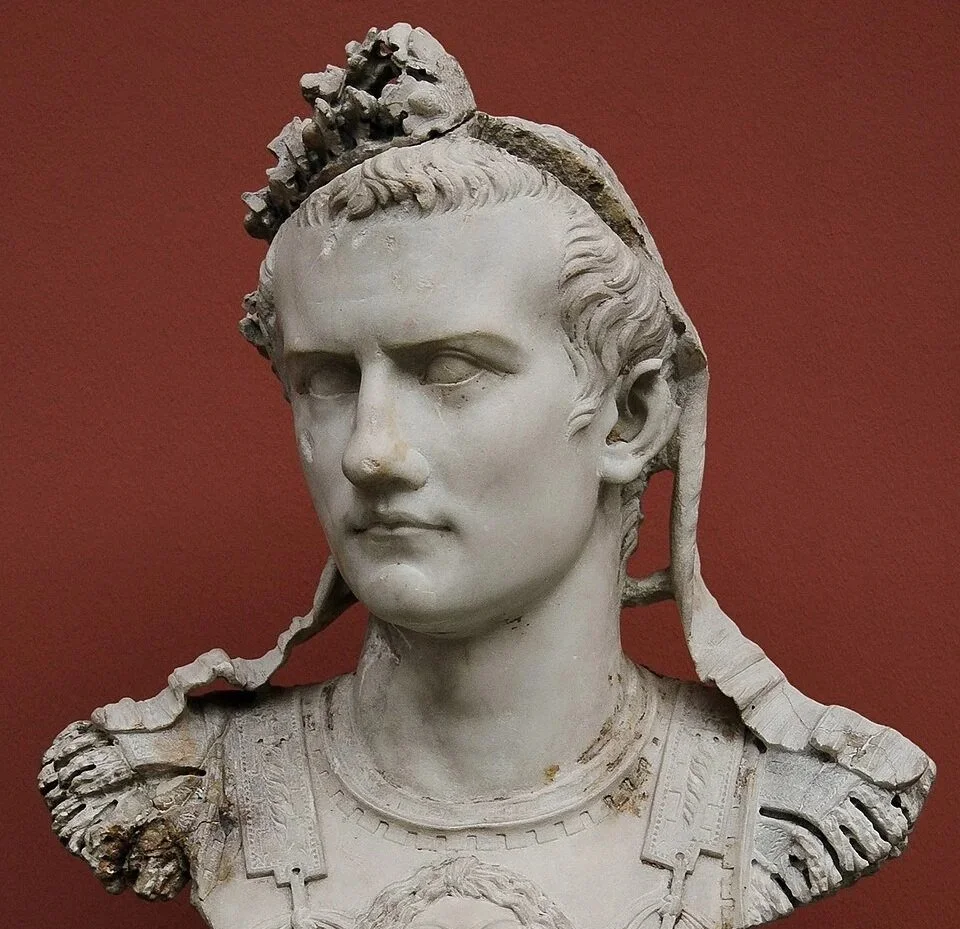
Marble bust of Caligula, (ca. 37—41 C.E.), Ny Carlsberg Glyptotek, Copenhagen.
Caligula’s name has become synonymous with sensuous excess and sexual debauchery. It is, therefore, rather fitting that the main financial backer of the infamous 1979 film based on his life was the founder of Penthouse.
(For a far more relevant—not to mention less retch-inducing—modern portrayal of Caligula, I direct you to John Hurt in the BBC adaptation of I, Claudius, which I have already recommended).
Caligula’s biographers wrote with horrified fascination of his extravagance, depravity, and derangement. He declared war against the god Neptune and ordered his soldiers to gather seashells as spoils of war. He routinely ravished the wives of leading senators and committed repeated incest with his sisters. He declared his favorite horse consul. For what it’s worth, scholars question the accuracy of many of these claims.
Caligula also famously proclaimed himself a god and demanded that he be worshiped accordingly—whether because he sincerely believed himself divine or simply as a means of asserting his political dominance is unknown. Whatever the case may be, the emperor’s outlandish behavior managed to accomplish a rare feat—uniting the Senate and the Praetorian Guard in opposition to him.
While addressing an acting troupe in the palace, Caligula was cornered and attacked by a cadre of Praetorian officers, who hacked and stabbed the emperor to death.
According to the historian Suetonius, Caligula’s final utterance was, “I live!”—perhaps an expression of his certainty that, as a god, he could not die, or else a baiting challenge to his assassins to finish what they had begun.
Claudius (41—54 C.E.)—Vae me, puto concacavi me.
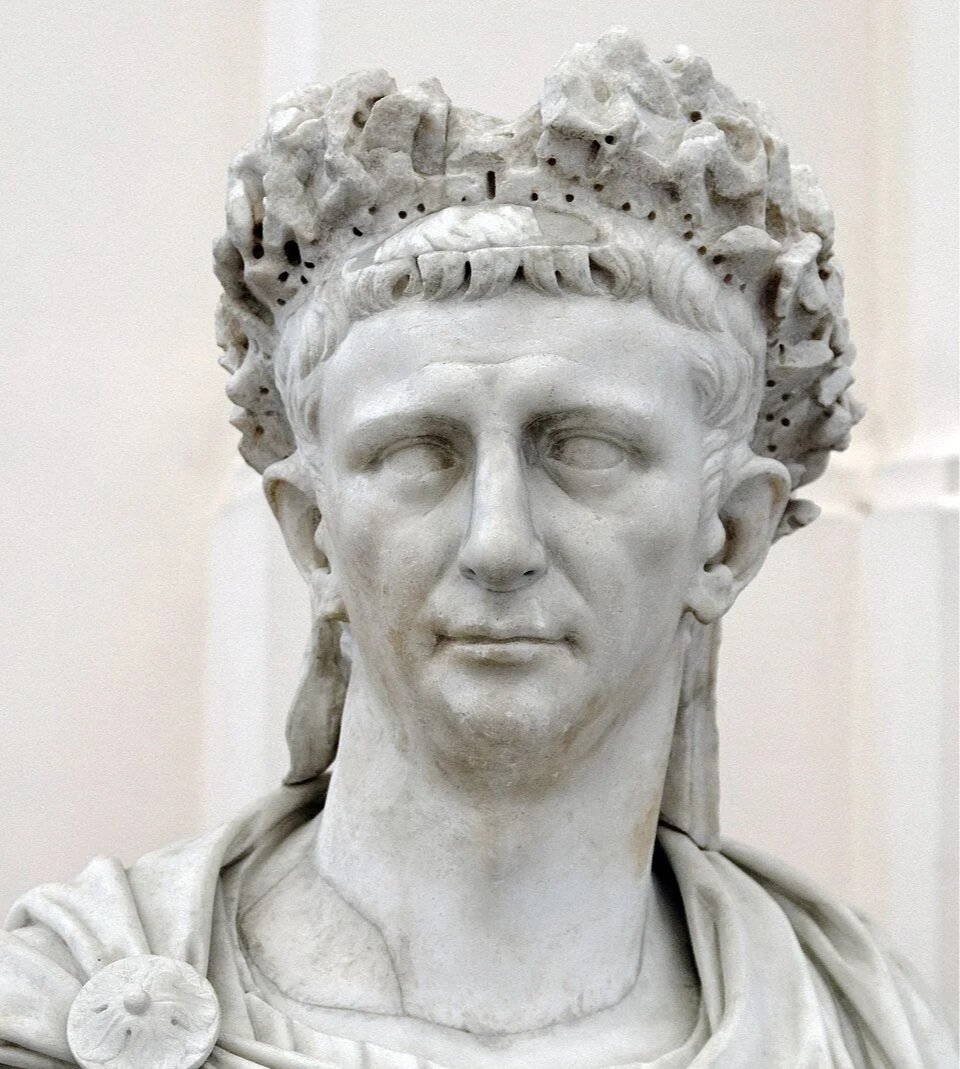
Marble bust of Claudius (ca. 41—54 C.E.), Museo Archeologico Nazionale di Napoli, Naples.
Before any eagle-eyed classicists get their hackles up, yes, these were almost certainly not Claudius’s actual last words. They were most likely put in his mouth by an unkind satirist with a personal score to settle.
According to me and Robert Graves, Claudius never really got his due. A childhood illness left him with a limp, a tremor, and a stammer, which marked him out to the famously superficial Romans as damaged and stupid. His own mother routinely called him a monster and a fool. Augustus, Claudius’s great-uncle, considered him an embarrassment and sought to keep him largely out of the public eye.
For most of his life, Claudius stayed away from politics and developed a reputation as a competent scholar and antiquarian—which probably explains my affinity as well as his survival at a time when family members had a disturbing propensity for meeting with mysterious and unnatural ends.
His ascent to the imperial throne was mere accident; after the Praetorian leadership murdered Caligula, and while the Senate was debating the restoration of the Republic, a troop of guardsmen found Claudius cowering behind a curtain and proclaimed him emperor, more or less at sword point.
Nevertheless, it appears that Claudius was an effective emperor. He improved Rome’s alimentary system, instituted important judicial reforms, and oversaw the conquest of much of Britain, although his direct involvement was very limited.
But it wasn’t all triumph and accolades for Claudius. Never lucky in love, he was forced to execute his third wife, Messalina, after her manifold affairs and attempts to overthrow him came to light. His fourth wife, Agrippina the Younger, manipulated the aging Claudius into setting aside his own son in favor of hers, Nero, and, once Nero’s succession was assured, she did away with the emperor by poisoning his favorite mushroom dish.
This indignity was compounded by the ire of the Stoic philosopher Lucius Annaeus Seneca, whom Claudius had banished from Rome for eight years.
Despite his Stoicism, which demanded equanimity in the face of suffering, Seneca never found it in his heart to forgive Claudius, and he published a cruel satire on the emperor’s death and afterlife.
It is really quite dismaying that Seneca’s last words for the perennially underestimated and underappreciated Claudius were, “Oh dear, I think I shit myself.”
Nero (54—68 C.E.)—Qualis artifex pereo.
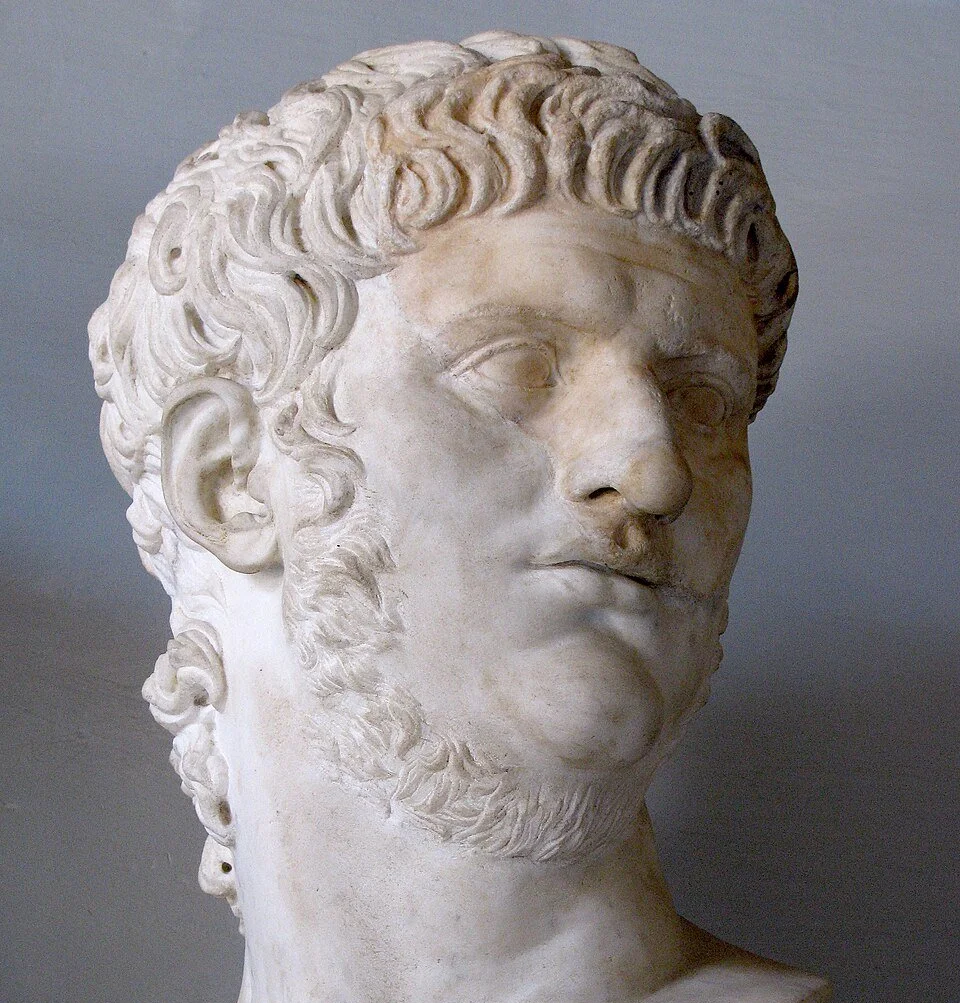
Marble bust of Nero, (ca. 54—68 C.E.), Capitoline Museums, Rome.
Nero’s claim to fame is that he fiddled while Rome burned. This is not true—and not simply because he predated the fiddle’s earliest known antecedent by almost a millennium. Besides, he racked up enough other transgressions to legitimately earn himself a spot among Rome’s worst emperors.
He likely had a hand in murdering his step-brother, Claudius’s son, Britannicus, and he certainly divorced, banished, and then ordered the execution of Claudius’s daughter, Octavia. He was also accused of kicking his second wife to death while she was pregnant.
Suggestions that he was responsible for the Great Fire of 64 C.E. have been dismissed as calumnious, and he even received praise for opening his palace to citizens who had lost their homes. But that uncharacteristic act of generosity did not stop him from capitalizing upon the disaster by hoarding the newly-vacant real estate for the construction of a massive new palace complex, nor from giving himself political cover by blaming the conflagration on Rome’s fledgling Christian community and subjecting it to its first centralized persecution.
He also connived in the murder of his own mother, which was not only an act of horrific impiety but also of tremendous ingratitude, given that it was his mother’s manipulation—and later poisoning—of Claudius, which put him on the throne in the first place.
But none of this was how Nero defined himself. If you were to ask him, he would say that he was an athlete and, especially, an artist at heart. How else could he have taken crowns in seven events at the Olympic Games of 67—perhaps other than the judges’ quite reasonable fear of hideously protracted execution if they named another winner…?
Within the year, Nero’s antics had sparked revolts abroad and unrest at home, and he awoke one night to find the palace deserted. Desperate and alone but for a single dedicated slave, he fled Rome in disguise to a nearby villa, where he took his own life.
As his lifeblood spilled out, his only thought was for how much poorer the world would be without him in it: “What an artist dies in me.”
Vespasian (69—79 C.E.)—Vae, puto deus fio.

Marble bust of Vespasian, (ca. 70—79 C.E.), Ny Carlsberg Glyptotek, Copenhagen.
Vespasian was an unassuming country gentleman, who never allowed himself the luxury of airs, even after he became emperor. He was even in the practice of putting on his own sandals in the morning rather than having a slave do it for him—as shocking as that sounds.
Vespasian was also known for his dry wit. When he reinstated an unpopular tax on the distribution of urine from public latrines—urine being an important ingredient in multiple industrial processes—his son Titus complained about its sordid nature. Vespasian held a gold coin under Titus’s nose and asked if the odor was offensive. When Titus said that it was not, Vespasian said, “And yet it comes from piss!” To this day, Vespasian’s name attaches to public urinals in Italy and France, which he probably would have found amusing.
From the time of Augustus, it was customary for the Senate to confer divine status upon deceased emperors deemed worthy of the honor. Even on the threshold of death, Vespasian’s wit did not desert him. He could not help poking fun at this fawning practice. “Dear me,” he is said to have exclaimed, “I think I’m becoming a god…”
I should point out that, according to Suetonius, Vespasian uttered this quote when he was first struck by his fatal illness and that his actual last words were an exhortation to his attendants to help him stand because “an emperor ought to die on his feet.” But, for a humble blog post and in the service of humor, I am content to follow the order laid out by Cassius Dio.