
Sacred Geese & Scape-Dogs: The Supplicia Canum
In Rome’s darkest hour, man’s best friend comes up short and pays the price for centuries to come.
The sack of Rome at the hands of Brennus and his Gauls in the early fourth century B.C.E. was a formative event in Roman history. To ancient writers, Rome’s rebirth from the ashes of its destruction represented something like a second founding of the city, and it defined how later Romans perceived the threat posed by northern barbarians from Brennus’s Gauls all the way through to Alaric’s Goths and Attila’s Huns.
It also gave rise to one of the more bizarre religious celebrations on the Roman calendar—and that’s really saying something.
It must be noted that modern scholars debate the ancient narrative of the Gallic sack, and archaeology has thus far failed to uncover clear evidence of a destruction layer from this period. But what is important for our purposes is how the Romans themselves remembered the event, and, as far as they were concerned, it was a defining trauma.
The Battle of the Allia and the Sack of Rome
The whole thing started the way it did with surprising regularity in Roman history: some hot-headed noblemen got involved in a fight that wasn’t theirs—in this case, a dispute between a Gallic tribe and an Etruscan city-state—and triggered massive consequences. Through a series of miscalculations and completely avoidable blunders, the Gauls won a lightning victory against an unprepared Roman army that managed to flee in the wrong direction, leaving the city defenseless.
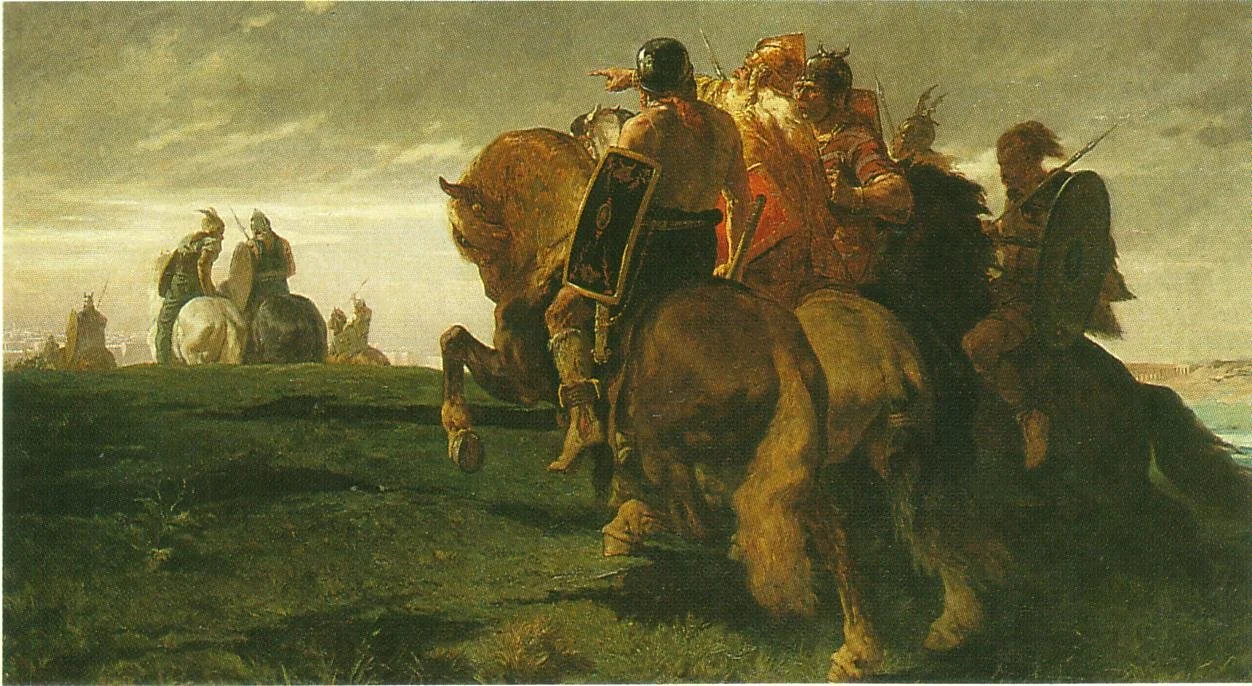
Évariste Vital Luminais, Gaulois en vue de Rome (1896), Musée des Beaux-Arts de Nancy, Nancy.
The Gauls, stunned by the ease of their triumph, assumed that they were facing an ambush and did not capitalize on their victory for a day or more. Eventually, though, the invaders realized that they were unopposed and, nonplussed but entirely pleased with themselves, took possession of Rome and proceeded to despoil it.
The Siege of the Capitoline Hill
Best known today as the site of a spectacular archaeological museum (not to be missed!), in the early fourth century, the Capitoline Hill was Rome’s religious heart and defensive point of last resort—serving the same purpose as the Athenian Acropolis.
While the Gauls busied themselves with stripping the city and its people of their valuables, a ragtag band of civilians and soldiers found refuge on the Capitoline Hill—which was less a hill than a fist of rock surrounded on three sides by sheer cliffs—and began to prepare it for siege. By the time the Gauls realized what was happening, the Romans had made the Capitoline almost impregnable.
According to the ancient sources, the siege dragged on for months of frustrating stalemate—the Gauls could not take the height, the Romans could not escape it. But the Romans were playing for time. They knew that they only had to wait for reinforcements to return and eject the Gauls from the city—if their provisions held.
The Gauls, in the meantime, were determined to extirpate the Roman resistance in their midst.
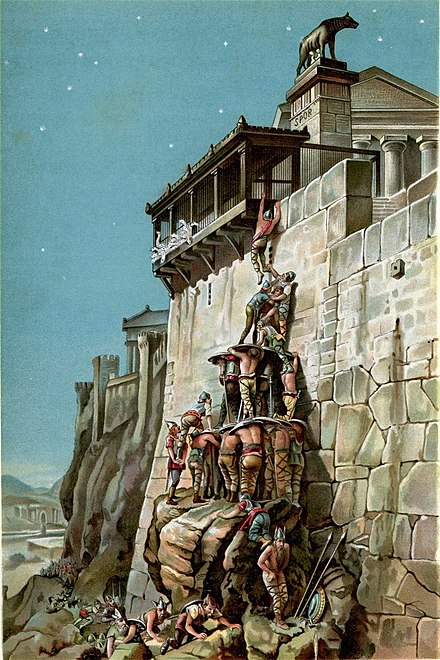
H. A. Guerber, “The Gauls scaled the Capitoline Hill,” illustration in The Story of the Romans (New York: American Book Company, 1896).
They discovered a practicable ascent up one cliff face and sent a party of warriors to climb it at night and take the defenders in their sleep.
Their climb was undetected. The Roman sentries did not see them, and the guard dogs, if they sensed the attackers’ presence, did not raise the alarm.
The Romans only realized something was amiss when a gaggle of geese—which had been spared slaughter because they were sacred to the goddess Juno—erupted into a cacophony of flapping wings and panicked honks, rousing the defenders from their beds in time to hurl the Gauls back down from the summit.
This setback, coupled with hunger on both sides, prompted a negotiation of terms. This is the setting for the famous story of Brennus throwing his sword on the scales weighing the exorbitant ransom he demanded and declaring, “Woe to the vanquished!”
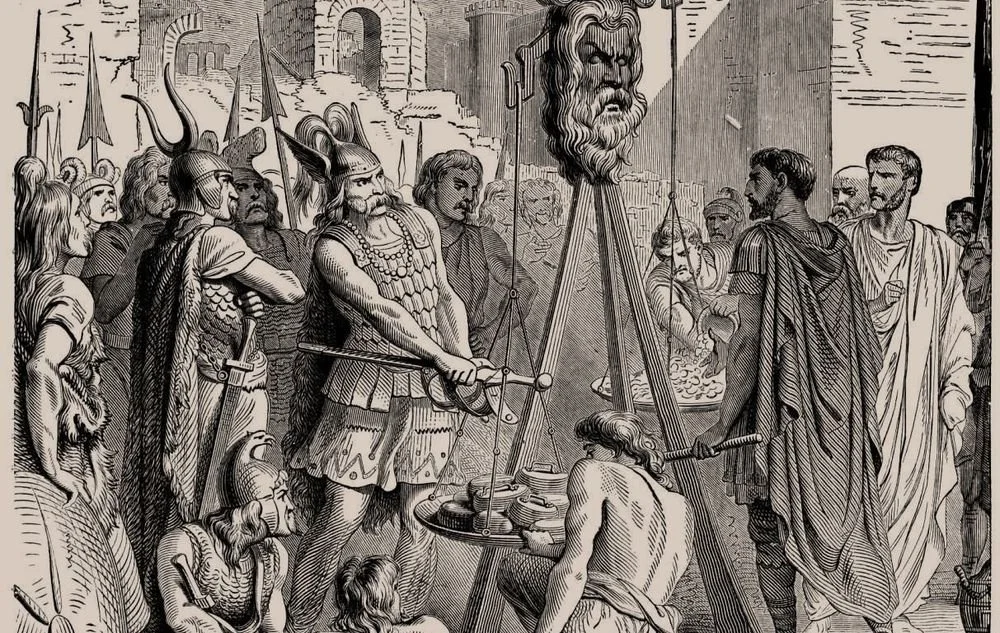
Paul Lehugeur, Brennus and Sulpicius, illustration in Histoire de France en cent tableaux (Paris: A. Lahure, 1886).
The Gauls departed Rome—whether unmolested and flush with Roman gold or slaughtered by the avenging Roman relief force soon thereafter depends on your source—and that’s when the myth-making began.
Crime & Pupishment (sorry)
On the third day before the Nones of August (August 3), the Romans observed the Supplicia Canum, the Punishment of the Dogs.
A solemn procession wended its way from the Shrine of Juventas, the goddess of youth and rejuvenation, on the Capitoline, down into the Forum and thence to the Circus Maximus and the temple of the obscure, archaic god, Summanus.
Were you to find yourself among the throng lining the Sacred Way, the first thing you’d notice would probably be the crucified dogs carried aloft above it like grisly banners.
According to our sources, this gruesome ritual practice—which sounds like a vision out of a Sarah McLachlan fever dream—originated with the failure of the guard dogs to alert the Capitoline defenders of the Gallic assault.
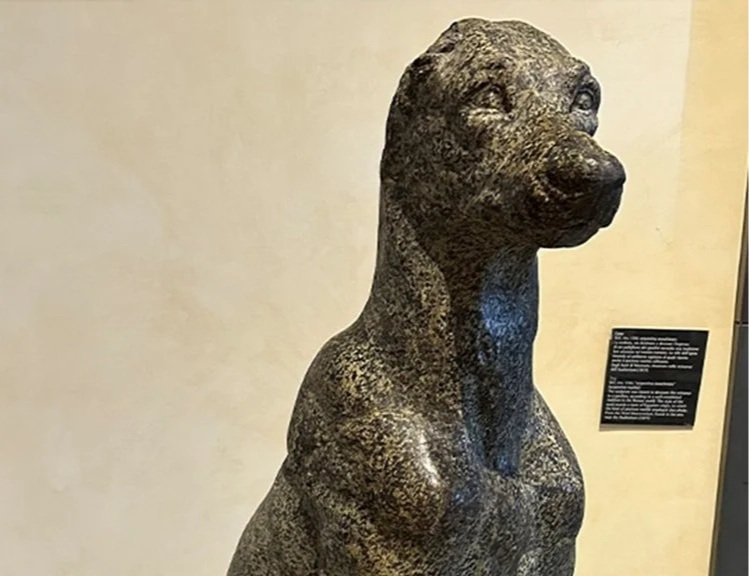
He knows what he did!
Serpentine marble statue of a dog (ca. 1st century B.C.E.—1st century C.E.), Capitoline Museums, Rome.
In a brutal application of kin liability, the Romans either lashed living dogs to forks of elderwood, as reported by Pliny the Elder, or else impaled them on stakes, according to Plutarch. This level of vitriol would seem rather excessive, even when we take into account Aelian’s explanation for why the watchdogs did not bark. Whereas most sources suggest that they simply did not notice the attack, Aelian claims that the dogs, reduced to near starvation by months of siege, were mollified by the Gauls, who offered them scraps of food. If there was one thing the Romans of the Early Republic loathed—other than kings, Gauls, unchaste Vestal Virgins, fancy Greek habits, and Etruscans—it was treachery, and, indeed, the wooden fork and stake were common implements of execution for those condemned for treason.
What’s Good for the Goose…Not So Much for the Doggo
What all our sources agree on is the heroism of Juno’s sacred geese, and their good service to the Republic was honored accordingly.
In 344 B.C.E., the Romans erected a temple on the Capitoline dedicated to Juno Moneta. Later generations believed that the appellation Moneta derived from the verb monere, which means “to warn,” a reference to the warning of the geese—although modern scholars dispute this interpretation. Pliny, in his encyclopedic Historia Naturalis, felt it worth mentioning that one of the first line items in the annual budget was provisioning for Juno’s geese.
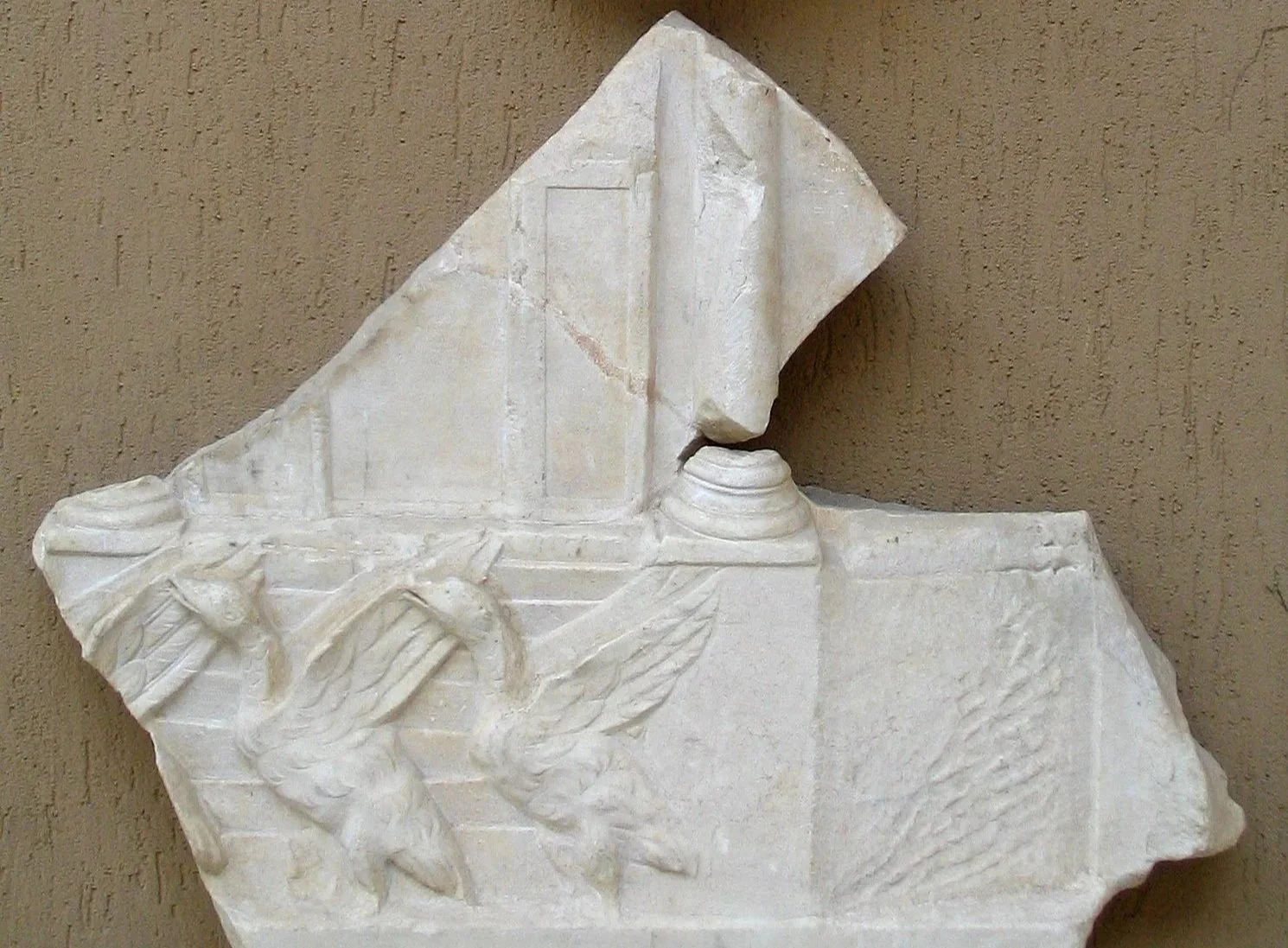
Marble bas-relief of the Capitoline Geese, (ca. 1st century—2nd century C.E.),
Museo Archeologico Ostiense, Ostia.
They also earned pride of place in the Supplicia Canum. Throughout the celebration, the sacred geese were praised and pampered. The celebrants festooned the birds in gold and purple and bore them with great pomp on sumptuous litters, and when the train arrived at the Temple of Summanus, priests hand-fed them the highest-quality grain.
And all the while the dogs, suspended above the procession on their stakes, writhed and whined, and eventually died.
Guilt by the Most Tenuous Association
The dogs of the Supplicia Canum had a truly raw deal, which, I recognize, reads as a tremendous understatement, but bear with me.
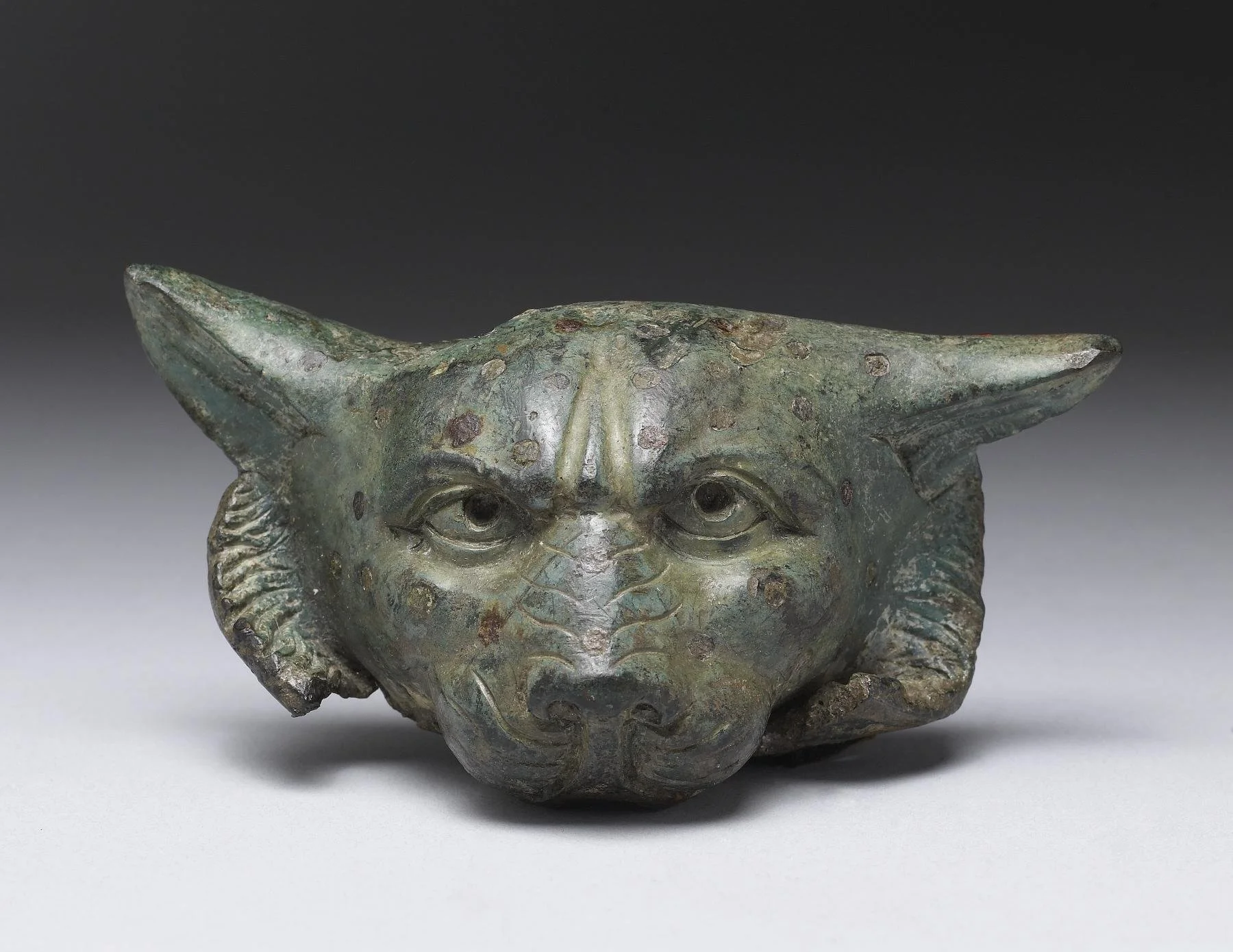
Bronze dog head appliqué from a bed (ca. 1st century C.E.), Walters Art Museum, Baltimore.
Our sources make it clear that it was not only the dogs’ watchfulness that was wanting on the night of the Gallic assault. The Roman sentinels did not detect the attackers either, and yet they managed to get off scot-free—except for the one sentry the defenders decided to throw off the Capitoline in punishment for the collective lapse in vigilance.
But, besides the single unfortunate sentry, the Romans did not think it necessary to punish themselves for the near-disaster. This is not without precedent. Many historical and contemporary practices center around the transfer of individual and communal guilt onto a non-human subject—i.e. scapegoating.
Very few of these practices, however, involve words like “crucifixion” and “impalement.”