
Julius Caesar & the Pirates
The young Julius Caesar was kidnapped by pirates. What ensued was basically the opposite of Stockholm Syndrome.
By the end of the second century B.C.E., the Roman Republic controlled much of the Mediterranean coastline after vanquishing almost all of the major naval powers in the region: Carthage in North Africa had been completely destroyed; the Seleucid Empire in the Near East had been reduced to a rump state; the island city-state of Rhodes was made into a Roman client; Ptolemaic Egypt had already spent a century in decline.
And yet, the Romans had little interest in directly administering their growing empire—other than to ruthlessly tax their provincials and tamp down any rebellions those taxes inspired. This laissez-faire approach left a significant power vacuum in much of the Mediterranean world, and it was not long before someone rose to exploit it: pirates.
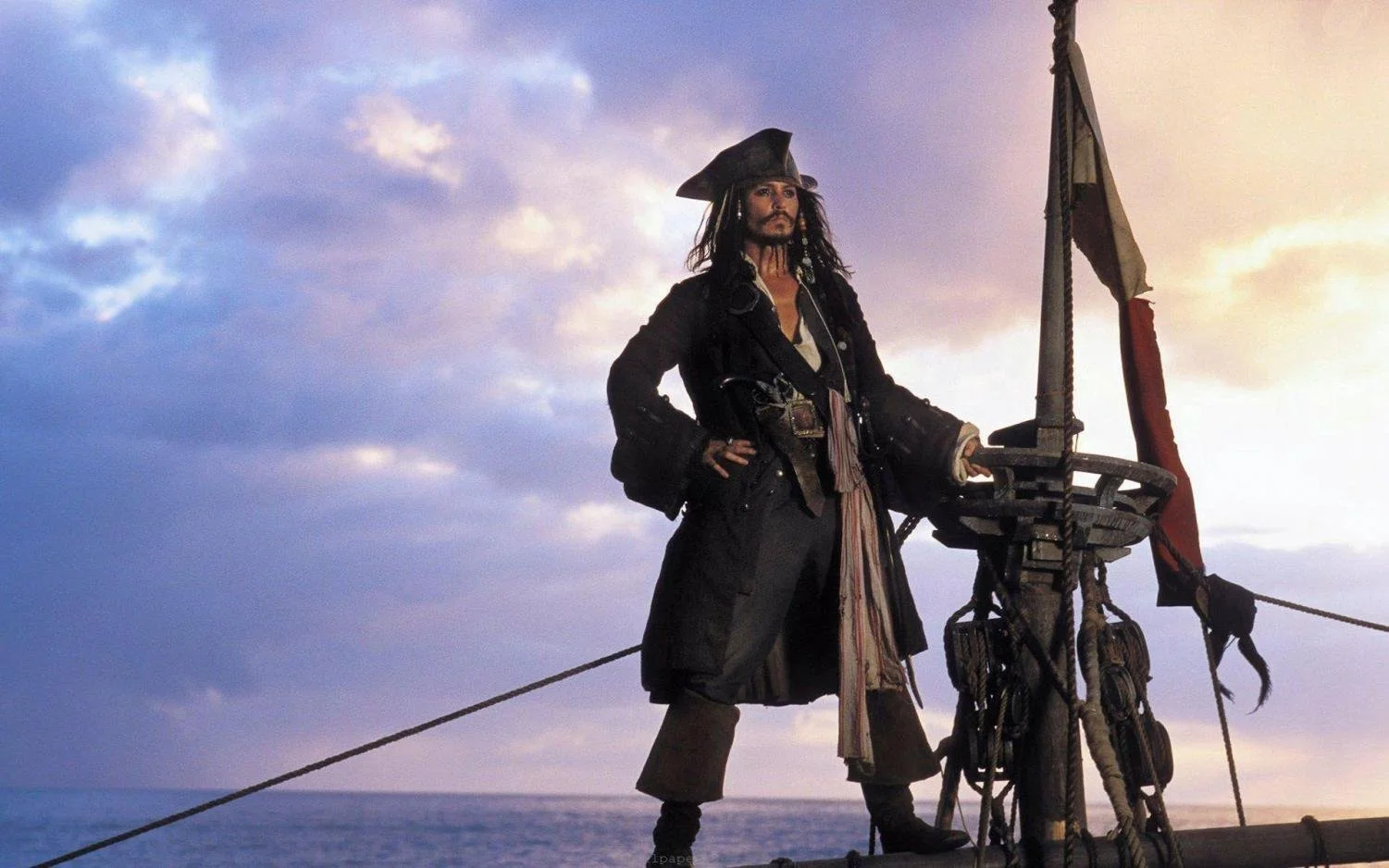
More or less.
Operating primarily from Cilicia (the southern coast of Anatolia) and Crete—but from pretty much any spit of coast cut with hidden coves where a chief could stash a boat or two—the pirates soon laid a massive, decentralized dragnet across the central and eastern Mediterranean. They kidnapped people by the thousands to sell into slavery. Their campaign of hijacking and looting trade ships was so extensive that commerce was effectively halted and the population of Rome was reduced to near famine. The scale of the pirates’ depredations grew so extreme—and their sense of impunity so ingrained—that they even dared to raid major cities and, most horrifyingly for their contemporaries, ancient temples and sanctuaries that should have been sacrosanct.
We welcome into this fraught and chaotic setting the twenty-five-year-old Gaius Julius Caesar.
Caesar had already seen his fair share of excitement. At the age of eighteen, he had run afoul of the dictator Lucius Cornelius Sulla by refusing his command to divorce his wife—the daughter of Sulla’s defeated political enemy—and was forced to go into hiding to avoid execution. He likely only survived due to the intervention of friends and family members, who prevailed upon Sulla to relent.
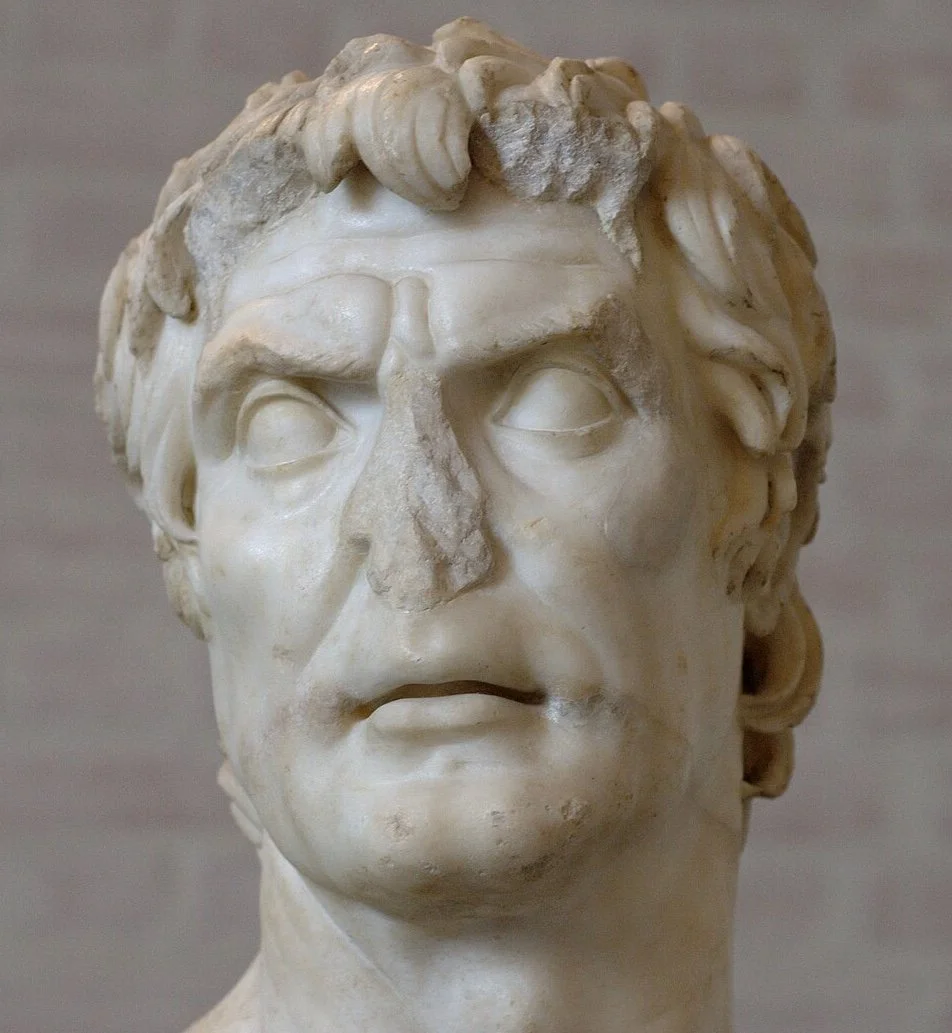
Marble bust of Lucius Cornelius Sulla (ca. 1st century B.C.E.), Glyptothek, Munich.
By 75 B.C.E., Sulla had been dead for three years, and Caesar—still married—was nearly ready to embark upon his public career. But first he arranged to study oratory—a critical skill for any young nobleman on the make—with the famous rhetorician Apollonius Molon on the island of Rhodes. It was while en route to Rhodes that his ship was waylaid by a band of pirates and the young Caesar was taken as a hostage.
Hostage taking was a profitable sideline for the pirates. While most of their victims were common seamen and impoverished fishing villagers—perfect fodder for the slave markets—every once in a while they netted a famous and wealthy Roman who could command a meaningful ransom; Publius Clodius Pulcher, whom we encountered in a prior post, would have his own embarrassing run-in with pirates in 67 B.C.E.
And yet, one could be forgiven for facing the prospect of capture at the hands of the Cilician pirates with terror. According to the historian Plutarch, it was not uncommon for them to shove Roman citizens overboard to drown for their own amusement.
Caesar, it seems, felt nothing but disdain for his captors—and he went out of his way to make sure they knew it.
When they informed him that they intended to demand a ransom of twenty talents of silver—an immense sum—for his safe release, he laughed in their faces. He was Gaius Julius Caesar, the scion of an ancient patrician house, a direct descendant of the goddess Venus. Twenty talents was tantamount to an insult! He would only consent to a ransom of fifty talents, and not one obol less!
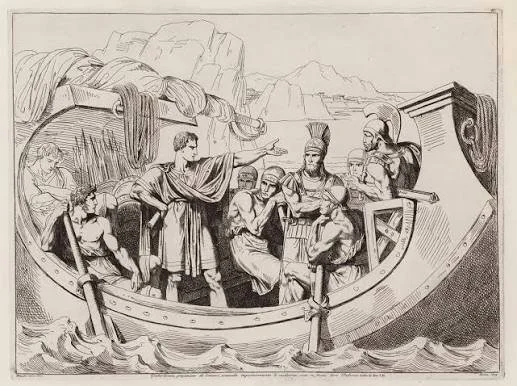
Bartolomeo Pinelli, Giulio Cesare prigione de' Corsari comandando imperiosamente di tacere, (1819).
The pirates blinked in surprise, looked at one another, and then shrugged. Why not? Fifty was better than twenty, after all. And besides, there was something perversely amusing about this arrogant, posturing young man who did not quake at the knees when facing the dreaded Cilician pirates.
So, the pirates sent Caesar’s attendants off to the cities of Asia Minor to obtain the now grossly-inflated ransom, and they brought their quarry to the remote Aegean island of Pharmacusa, where Caesar went about making himself as obnoxious a guest as one could imagine.
Deprived of the opportunity to study with Apollonius Molon, Caesar spent much of his time on the island composing poetry and speeches, which he recited to the bemused pirates. When they failed to applaud at the appropriate times, Caesar scorned them as illiterates and barbarians. At night, he ordered the pirates to be silent so as not to disturb his sleep. One can imagine Caesar issuing demands to his captors as though they were his personal concierge: fresh towels, extra pillows, this beef is tougher than sandal leather, who taught you how to cook?
The pirates, for their part, thought this was all very funny. They seemed to have regarded the haughty young aristocrat as something of a mascot. They even invited him to join in their sport and athletic competitions, which he graciously deigned to do. But whenever he joined in, he would always make the same promise: as soon as he was released, he would return and crucify them all. Each and every one of them.
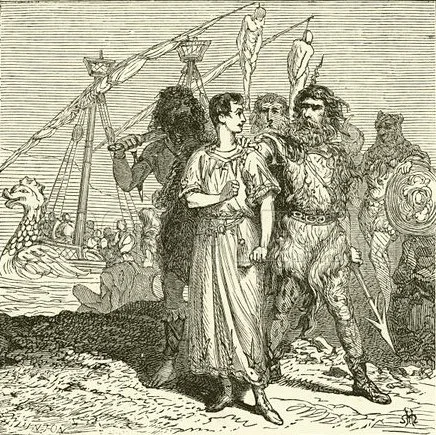
Henri de Montaut, César est fait prisonnier des pirates, (1865).
Every time he said this, the pirates would just roar with laughter.
After thirty-eight days among the pirates—whom Plutarch says the young aristocrat regarded as less his jailers than his body-guards—the ransom was delivered and the pirates bid a hearty farewell to Caesar, who wasted no time in making good on his threat.
He and his retinue set out for the free city of Miletus where he went about raising ships—the fact that he was a private citizen with no legal authority whatsoever was evidently a concern for lesser mortals. The citizenry of Miletus rallied to Caesar regardless, and he and his makeshift fleet set sail for the pirate haven on Pharmacusa.
The pirates, who had no notion that Caesar’s threats were in earnest, were taken completely by surprise. Perhaps a few of them might have wondered if the young nobleman was taking his joke a little too far. If so, they were quickly disabused.
Caesar and his Milesian allies captured almost the entire band, took their property as spoils of war, and reclaimed the entire fifty-talent ransom—which somehow found its way into Caesar’s personal coffers.
Caesar brought his captives to Pergamum, then the capital of Rome’s Asia province, and presented them to the proconsul, Marcus Junius Juncus, whose jaw, we must assume, dropped at the sight of the bumptious young Caesar and his Milesians leading a full band of pirates, yoked and bound, before him. Caesar offered his compliments to Juncus, recounted the tale of his peculiar triumph—probably without eliding anything in the interests of modesty—and expressed his confidence that Juncus would crucify the pirates, as Caesar had promised.
Juncus, however, had no intention of fulfilling Caesar’s promise for him. Like many—if not most—Roman politicians, Juncus viewed his appointment abroad as an opportunity for personal enrichment, and he knew that a band of dead brigands enriched no one but the flies and the ravens. Far better to sell the lot into slavery and turn a small profit for himself. So, he dismissed Caesar with fulsome praise for his daring and industry as well as his promise to give the matter due consideration.
But Caesar could guess what the proconsul was about and, never one to allow rank, privilege, or “the done thing” to get in his way, decided to take matters into his own hands. He marched straight to the prison where the captured pirates were being held and, through a combination of force of personality—and presumably bribes—prevailed upon the guards to crucify the pirates.
But before the sentence was carried out, Caesar ordered that his former captors’ throats be cut.
This was a surprising order. Crucifixion was a famously horrifying and excruciating death. Victims were suspended on wooden crosses by nails driven through their wrists and ankles, and left to die of exposure and lingering suffocation. The nastiness of it was exactly the point. To the Roman mind, it’s what made crucifixion a deterrent—perhaps a questionable assumption given the fact that they found countless opportunities to continue using it for centuries to come.
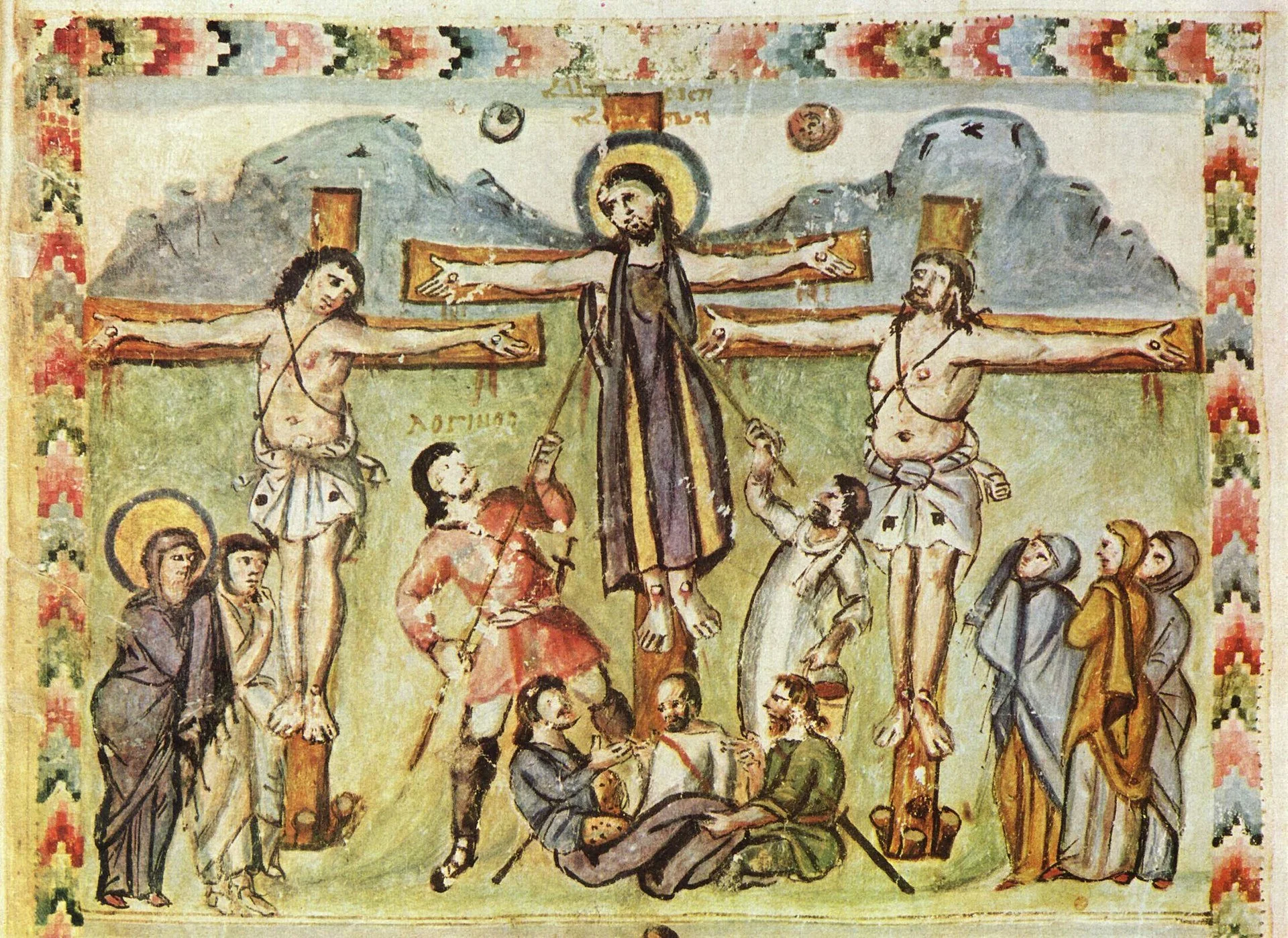
Illustration of the crucifixion of Jesus from the Rabbula Gospels (586 C.E.)
And yet, Caesar removed the deterrent by granting the pirates a speedy death and only then having them nailed to their crosses. Why?
This question has prompted a great deal of discussion, both in Antiquity as well as among modern scholars.
Caesar, despite his patrician background, had an unconventional streak. Throughout his life, he evinced a soft spot for oddballs, rogues, and the downtrodden. He had spent more than a month among the Cilician pirates; lived in their company, ate of their bread, and shared in their sport. Perhaps he had grown fond of them, the same as they had come to like him.
Or, perhaps, this was merely the first glimpse of the peculiar mercy that would later define Caesar’s career. Again and again, we see that Caesar spared enemies when he felt he could—and some of those enemies would eventually repay that clemency with daggers.
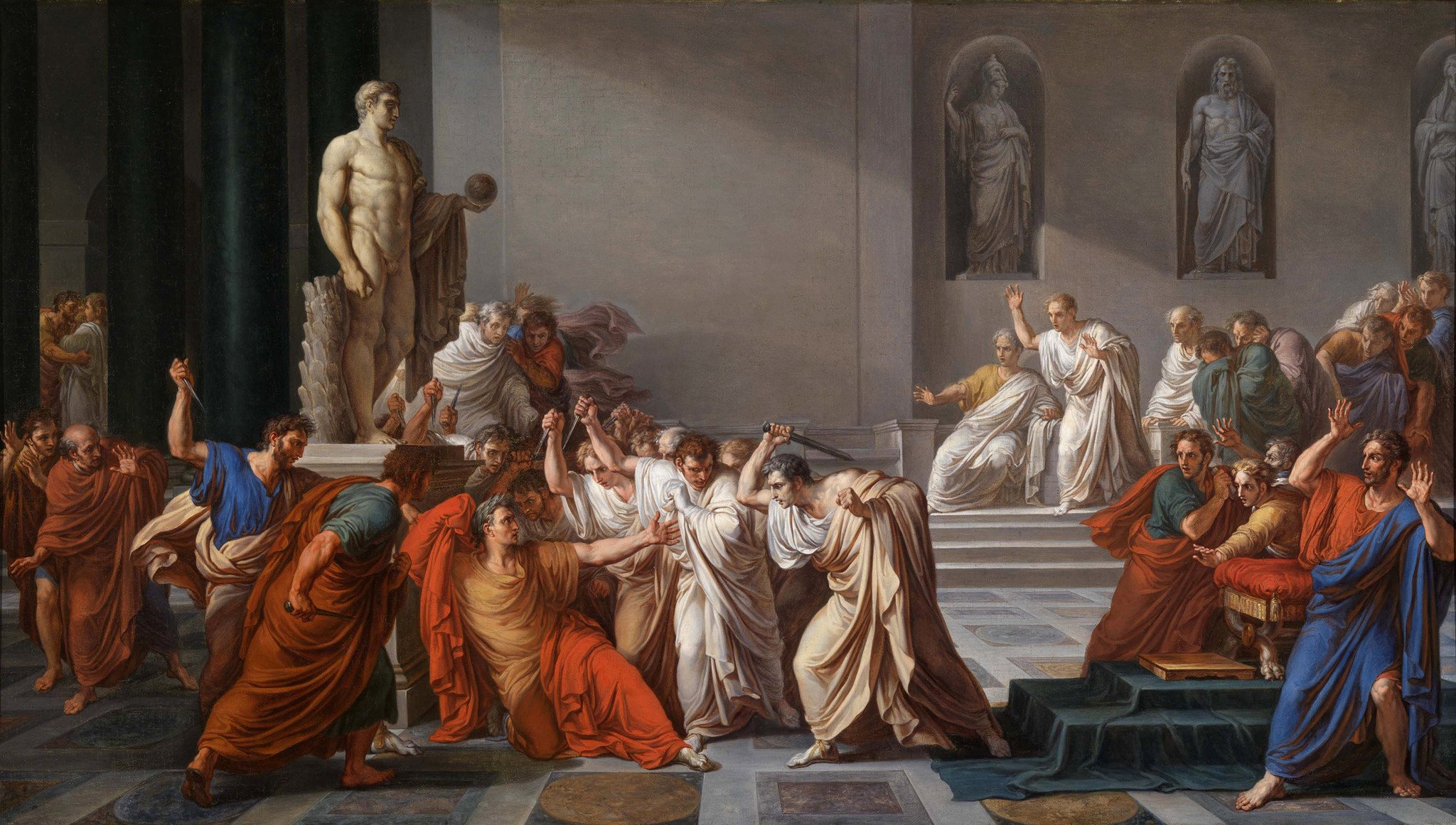
Vincenzo Camuccini, La Mort de César (1806),
Museo di Capodimonte, Naples.
Caesar wanted to be seen as a man of his word—which probably motivated his near-suicidal stubbornness in the face of Sulla’s divorce demand—so there could be no question of releasing them. But, at the very least, and for whatever reason, he would not see them suffer unnecessarily.
With the pirates dispatched, Caesar went on to Rhodes to study under Apollonius Molon, probably feeling quite satisfied with both himself and the extra fifty talents of silver to fund his career.
And the Cilician pirates enjoyed their control of the Mediterranean for just eight more years until Gnaeus Pompeius Magnus—Pompey the Great, later Caesar’s son-in-law and then his most famous enemy—launched a lightning campaign that swept the pirate scourge from the sea in the span of a few months.