
Publius Claudius Pulcher & the Sacred Chickens
On the eve of the Battle of Drepana in 249 B.C.E., Publius Claudius Pulcher ignored the omens and took temptation of Fate to a whole new level.
To the Roman mind, success in any endeavor was entirely at the will of the gods, the whim of chance, and the intervention of a host of unseen spiritual forces, both beneficent and malignant. It was, therefore, critical to ascertain the intentions of these entities before taking action. The Romans did this through the practice of divinatio, or divination.
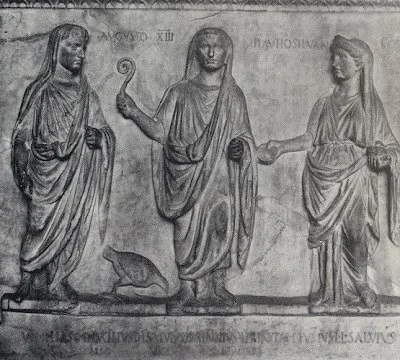
Relief of an augury from the altar of Marcus Plautius Silvanus (ca. 2 B.C.E.), Vatican Museums, Rome.
Sheep’s Livers & Interpretive Ornithology
The Romans could draw upon a wide variety of methods depending on the occasion and need.
Haruspicy, for example, was the originally Etruscan art of determining divine approval by examining the entrails of sacrificial sheep. Specialized priests called haruspices extracted the heart, lungs, and liver from the victim and scrutinized them for particular signs. For example, particular emphasis was placed on the condition of the caput iocineris—or head of the liver—which referred to a particular protrusion on the organ. If the caput iocineris was healthy, enlarged, or doubled, it was taken to foretell immense favor. If the caput was unhealthy or missing, it signified disapproval of the proposed action. If it was cut or mutilated during the sacrifice, it spelt disaster for the person offering the animal.
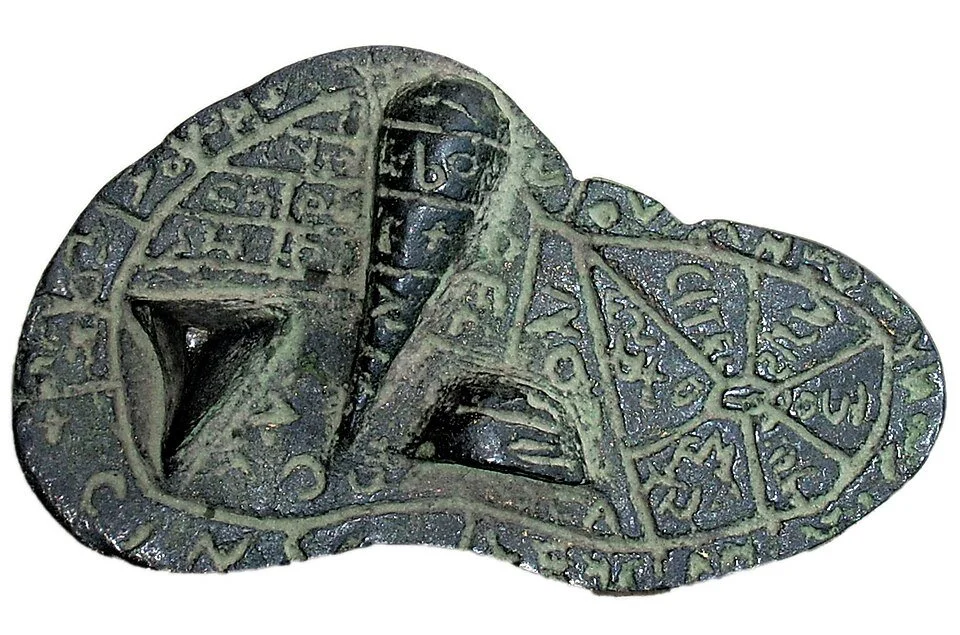
Liver of Piacenza (2nd century B.C.E.), Municipal Museum of Piacenza.
The Romans also made frequent use of augury, the practice of receiving omens through the interpretation of natural phenomena, most commonly the behavior of birds. This practice was called “taking the auspices,” from which we derive our word “auspicious.”
Augury ex avibus (from birds) perceived omens based on species, numbers, altitude, flight paths, and calls of various birds. Plutarch’s record of the founding of Rome by the twins Romulus and Remus is perhaps the most famous instance of this form of augury. The two brothers fell out over where to build their city; Romulus wanted to build it on the Palatine Hill, while Remus wanted it on the Aventine. They agreed to settle the argument by submitting to the will of the gods and taking the auspices. Remus spotted six vultures, after which Romulus spotted twelve.
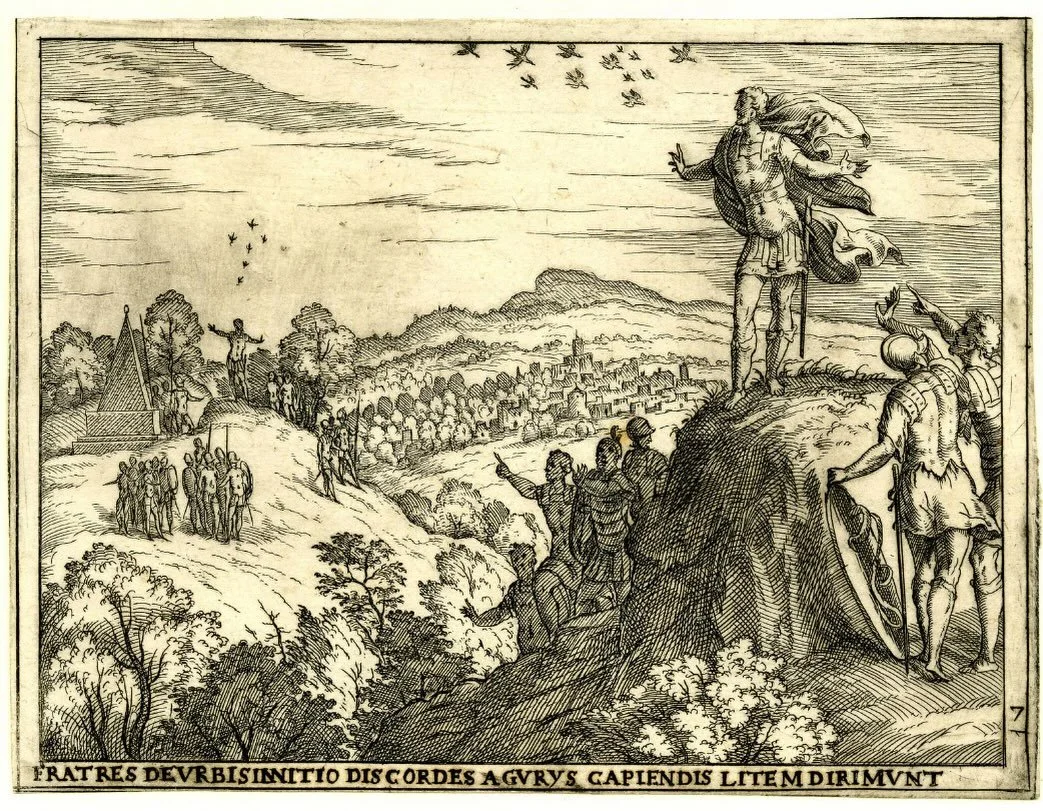
Figure X: Romulus and Remus Taking Auguries. Etching by Giacomo Franco after Giovan Battista della Rovere, 16th century, Plate 7. Inscription: Fratres de urbis initio discordes agurius capiendis litem dirimunt.
Ultimately, nothing was settled. Remus argued that he had won by seeing vultures first, while Romulus claimed preference because he saw more vultures. The brothers parted each to found his own city, and Romulus ended up killing his twin.
I suppose boys will be boys.
Another common practice, especially in wartime, was augury ex tripudiis—from the dance of feeding chickens—to which we will return.
The First Punic War
Between 264 and 241 B.C.E., the Romans engaged Carthage in the first of a century-long series of death struggles that would ultimately decide hegemony of the Western Mediterranean. The Carthaginians were a sea-faring people of Phoenician—whence Punic—origin who settled in modern Tunisia and built a broad network of colonies and satellites along the North African coast, southern Spain, and the islands of Corsica, Sardinia, and Sicily.
Devotees of military history will probably know that the Romans, hitherto a land power, had no experience waging war on the sea. Initial forays into traditional naval warfare—predicated upon ramming and sinking enemy vessels—against the experienced Carthaginians resulted in disaster, which led the Romans to a novel solution: they outfitted their ships with specially-designed boarding ramps, which they could drop onto adjacent vessels, thereby turning a sea battle into a land battle—which was very much in the Romans’ wheelhouse.
This shifted the odds in Rome’s favor.
Disaster at Drepana
One of the two consuls for the year 249 B.C.E. was Publius Claudius Pulcher, who was the great-great-great-great granduncle of the Publius Clodius Pulcher we encountered in the Bona Dea Scandal. Although the latter Clodius was not directly descended from our current Claudius, it does appear that they were cut from the same cloth: headstrong, impulsive, and quick-tempered.
At the start of his consulship, Pulcher took command of the Roman fleet of one hundred twenty-three ships and set sail for the port of Drepana on the western tip of Sicily where a Carthaginian fleet of roughly equal strength was at anchor. While underway, Pulcher ordered that the auspices be taken.
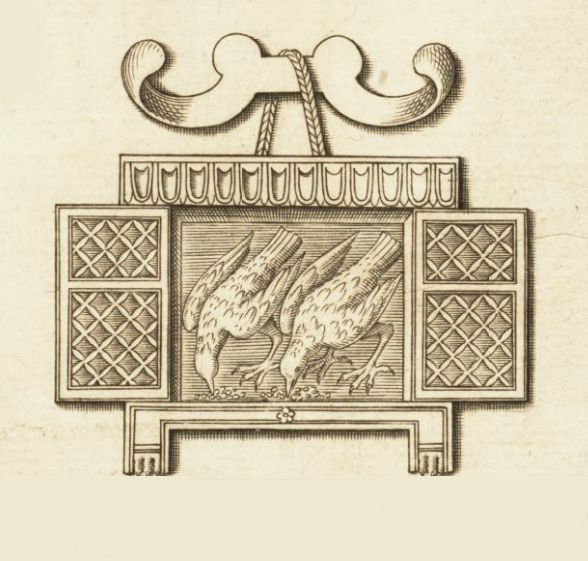
Engraving of the sacred chickens (pulli) inside their portable coop (cavea) by Nicolas Beatrizet (16th c.), originally published in Antonio Lafreri's Speculum Romanae Magnificentiae.
The fleet’s augurs raised their curved wands and called upon the pullarii, the Keepers of the Chickens—amazing title—to retrieve their charges. The pullarii brought forth the baskets, placed them upon the deck and opened them to reveal the sacred chickens within. They then scattered wheat seeds across the deck in front of the baskets.
The assembled company—officers, augurs, sailors, and marines—leaned forward eagerly to observe the feeding of the sacred chickens and thus know whether the gods favored their attack. Enthusiastic feeding would be a good sign. The very best sign would be if they pecked so eagerly at their food that a piece fell from the beak to strike the ground—incontrovertible proof that victory would be theirs.
But something was wrong. It was not simply that the birds were not eating with gusto.
They were not eating at all.
Some had not even emerged from their baskets, even when the pullarii gave them a quick shake in the hopes of goading the chickens out.
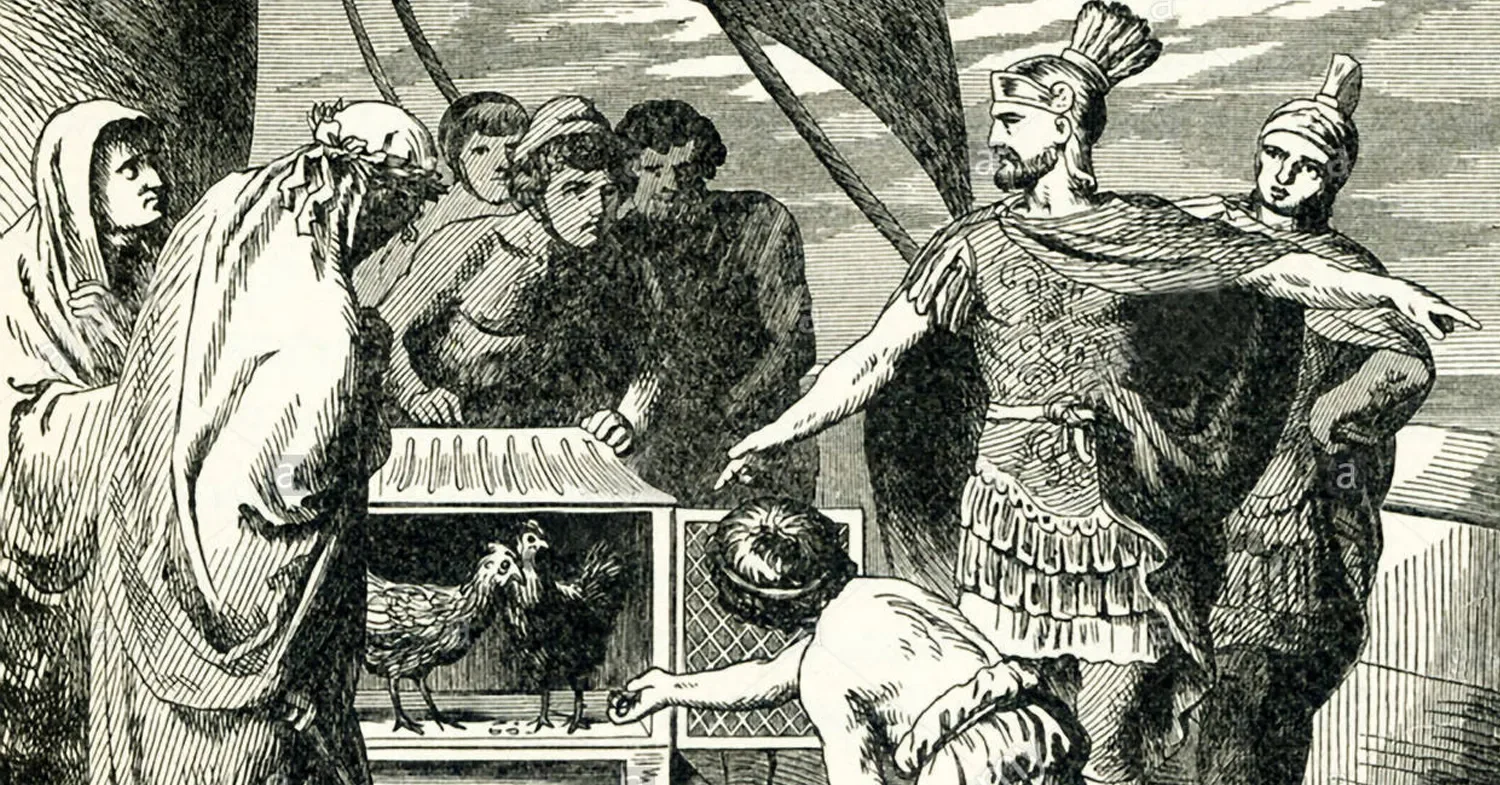
Publius Claudius Pulcher Consulting the Sacred Chickens before Drepana. Wood engraving, 1882.
Eyes began to flicker in the direction of the consul—who was glaring at the proceedings with a face like thunder.
This battle, this day, this moment now, was the pinnacle of his career. Decades of study, of struggle, of sweat, blood, and tears to attain the consulship, to win command of Rome’s great fleet, to lead them to victory over the Punic scourge.
But the signs could not be clearer. The chickens were not eating. The gods did not favor Rome this day.
Pulcher cursed inwardly and cursed again. He felt the ambitions that had seemed so close to his grasp—a glorious triumphal parade, election as censor, as high priest—slipping away like smoke through cupped hands.
It was not unknown for less scrupulous diviners to starve their chickens prior to taking the auspices. Damn it all, why hadn’t he thought of that?
It was intolerable. It was unacceptable. Everything he had worked and fought for was being imperiled, not by a political rival or an enemy army—but by a bunch of mindless birds too stupid to know that they should be eating.
He felt the eyes on him. Felt their unspoken fears, their unasked questions. Felt them willing him to do something.
And Pulcher uttered the words that would attach to his name forever: “Since they do not want to eat, let them drink!”

Publius Claudius Pulcher Throws the Sacred Chickens Overboard (249 BC). Wood engraving by Jules-Antoine Huyot after Jean-Léon Gérôme or Henri Motte, late 19th century.
And he had the sacred chickens thrown into the sea.
The Aftermath
What ensued was a complete fiasco for Rome.
Pulcher managed to break out of a Carthaginian encirclement with thirty ships. The other ninety-three ships—not to mention their twenty thousand crewmen—were lost.
Poor tactical control by Pulcher and superior Carthaginian seamanship combined to spell defeat. But, as far as his contemporaries were concerned, no degree of military genius on Pulcher’s part could have prevailed. Not only had he ignored the sole, inescapable conclusion to be drawn from the omens; he had ordered the hallowed chickens—sacred to Jupiter, no less—pitched overboard to drown.
Pulcher was recalled to Rome by an enraged Senate to answer charges of sacrilege and treason. He managed to avoid execution through a combination of procedural protections and familial influence, but he was subjected to a crushing fine of 120,000 asses—don’t snicker, you’re better than that—equivalent to tens of thousands of pounds of bronze and sent into permanent exile. He died in obscurity, possibly a despondent suicide.
As an epilogue to this tale, Pulcher’s sister, Claudia, also managed to get in on the fun. One day, she found her path blocked by a thick crowd of plebeians and she was heard to mutter that she wished her brother would return to life and lose another battle so as to thin out their vulgar ranks.
That little remark earned Claudia the distinction of becoming the first woman in Roman history to be convicted of treason and brought the Claudii Pulchri to near ruin in the course of paying a further penalty of 25,000 asses.
As we’ve seen, when a Claudian was confronted with two paths—one of calm deliberation and one of ill-considered action—no one needed prophetic chickens to ascertain which one they’d select.